Shelley and the Moon

The moon is a feature in some of Shelley’s work … including his masterpiece ‘Prometheus Unbound’ … whether or not you know anything about Shelley and his poetry have a look at the imagery conjured by this beautiful little poem (these are two fragments that were put together after his death) …

THE MOON

I.

And, like a dying lady lean and pale,
Who totters forth, wrapp’d in a gauzy veil,
Out of her chamber, led by the insane
And feeble wanderings of her fading brain,
The moon arose up in the murky east
A white and shapeless mass.

II.

Art thou pale for weariness
Of climbing heaven and gazing on the earth,
Wandering companionless
Among the stars that have a different birth,
And ever changing, like a joyless eye
That finds no object worth its constancy?

Percy Bysshe Shelley (1792-1822)

… and here are some ‘transformation lines’ from Prometheus Unbound (1 see below) showing a thankful Moon in discussion with Earth …

THE EARTH
…

“How art thou sunk, withdrawn, cover’d drunk up
By thirsty nothing, as the brackish cup
Drained by a Desart-troop – a little drop for all;
And from beneath, around, within, above,
Filling thy void annihilation, Love
Bursts in like light on caves cloven by the thunderball”

THE MOON

The snow upon my lifeless mountains
Is loosened into living fountains,
My solid Oceans flow and sing and shine
A spirit from my heart bursts forth,
It clothes with unexpected birth
My cold bare bosom: Oh! it must be thine
On mine, on mine!

Gazing on thee, I feel, I know,
Green stalks burst forth, and bright flowers grow
And living shapes upon my bosom move:
Music is in the sea and air,
Winged clouds soar here and there,
Dark with the rain new buds are dreaming of:
“Tis Love, all Love!

Prometheus Unbound Act 4 (lines 350-369)

Percy Bysshe Shelley (1792-1822)

Footnote …

1 Prometheus Unbound is based on the work of Aeschylus which dramatizes the sufferings of Prometheus, unrepentant champion of humanity, who, because he had stolen fire from Heaven, was condemned by Zeus to be chained to Mount Caucasus and to be tortured by a vulture feeding on his liver. Shelley continued the story but transformed it into a symbolic drama about the origin of evil and of overcoming it.

(Aeschylus (525-455BC) was an ancient Greek playwright … the father of tragedy … earliest of the three Greek playwrights Sophocles, Euripides.)

For those interested in Shelley’s background this is a link to an excellent bio –

… and some relevant text from the above site …

During this 1818-1819 period Shelley wrote what many consider to be his masterpiece, Prometheus Unbound (1820), subtitled A Lyrical Drama, perhaps to suggest a hybrid genre in the way Wordsworth and Coleridge had signalled their pioneering efforts by titling their first volume of poetry Lyrical Ballads (1798). Shelley had been developing the symbolism, imagery, and ideas for the poem for several years. For example, he states in the preface that “the imagery which I have employed will be found … to have been drawn from the operations of the human mind,” a technique he had already used in Mont Blanc. Shelley had had a longstanding interest in and familiarity with Aeschylus’s Prometheus Bound, even translating it for Byron, but he could not accept the idea that Aeschylus had bound the champion of mankind for eternity, or even worse, that Prometheus would have been reconciled with Jupiter in Aeschylus’s lost drama, the sequel to Prometheus Bound. As Shelley avers in the preface, “I was averse from a catastrophe so feeble as that of reconciling the Champion with the Oppressor of mankind.” The choice of Prometheus as his hero is not surprising, given this mythological character’s association with rebellion and isolation from his act of giving fire to man against the gods’ wishes and his reputation as a “fore-thinker” or prophet. For Shelley he came to symbolize the mind or soul of man in its highest potential.

Shelley was willing to challenge ‘the establishment’, the conventions of his day, and of more importance ‘The Gods’ (God) to establish his own internal truth.
P. B. Shelley – Philosophy from his Poetry

P. B. Shelley’s philosophy (following my previous Post on Love’s Philosophy) …

He went from an external to an internal philosophy based on humanity having the power to combat the sources of suffering based on a personal responsibility within the social framework (a micro view).

Here is his philosophy as reflected in some of his poetry … based on ‘The Norton Anthology’ –

1 … In Queen Mab …

… Shelley believed that injustice and suffering can be eliminated by an external revolution that will wipe out or radically reform the sources of evil

2 … In Prometheus Unbound …

… the origin of evil and the possibility of reform are the responsibility of men and women themselves. Social chaos and wars are a gigantic projection of human moral disorder and inner division and conflict, tyrants are the outer representatives of the tyranny of our baser over our better elements; hatred for others is a product of self-contempt; and successful political reform is impossible unless we have reformed our own nature at its roots, by substituting selfless love for divisive hate. Shelley incorporates into his secular myth … (i.e.  universal regeneration by an apocalypse of the moral imagination of the human race) … the ethical teaching of Christ on the Mount, as well as the highest classical morality represented in Prometheus.

Note … Prometheus Unbound (from Shelley’s preface) … is a large and intricate imaginative construction that involves premises about human nature and the springs of morality and creativity (Shelley abhorred didactic poetry).

The non-Christian poet W. B. Yeats called PU one of ‘the sacred books of the world’.

The Christian critic C. S. Lewis found in PU poetic powers matched only by Dante.

When I am in doubt – Glenn Colquhoun

When I am in doubt
(a poem for surgeons)

When I am in doubt
I talk to surgeons.
I know they will know what to do.

They seem so sure.

Once I talked to a surgeon.
He said that when he is in doubt
he talks to priests.
Priests will know what to do.

They seem so sure.

Once I talked to a priest.
He said that when he is in doubt
he talks to God.
God will know what to do.

God seems so sure.

Once I talked to God.
He said that when he is in doubt
he thinks of me.
He says I will know what to do.

I seem so sure.

Dr Glenn Colquhoun
Hammersmith Press UK 2007
First published Robert Steele NZ 2002

Glenn Colquhoun is a contemporary New Zealand poet and medical doctor. Here is a link to some of his poems … http://www.beyond-the-pale.co.uk/backwards.htm

I had the pleasure of attending a workshop under his leadership a couple of years ago.

This could be regarded as a ‘pass-the-buck for advice poem’ the sequence of authority being – Surgeon-Priest-God … and of course we are going up the ladder.

The last stanza is where it all happens so to speak … after the build-up … and apart from a cynical response here is another interpretation and an interesting twist …

… and generalizing in the following to anyone with difficult decisions in life …

… a nice personification of God that when He is in doubt that humanity will do the ‘right thing’ He has faith at a very personal level that ‘We’ will know what to do. You could say God has great faith in his  creation … great faith in you and me. Usually we see faith flowing the other way so the reverse is an interesting change of thought … an emphasis on a two-way connectivity of the flowing of faith.

… and of course to what extent does any ‘God-connectivity’ aid us in our own decision making can only be answered by each of us at a very personal level … regardless whether or not we have to make difficult decisions akin to the work of a doctor

… and do we go up the hierarchy in that quest for working out what to do – and is God on the agenda … well that’s another question

… another thought if you are in the creation process do you likewise have faith in your own creations … and faith in your own children if you have any … well we always live in hope.

The Fragrance at Flanders – Anzac Day 2014

The Fragrance at Flanders

This was not scented Alps
where nothing but the daylight changes,
nor descending by the Starnberger See
after early exercise, strolling into
the Hofgarten to drink coffee with friends
as unbridled talk merges
with the expanse of morning.

Nor was this a plunge
into a Bloomsbury morning
of Clarissa opening French windows
to the breath of a summer day. Nor a
blackbird singing in the daze of early light,
or the buying of flowers while thoughts distract
to the arrangement of a party.

At Flanders, in the half-born morning
body after body fell
indiscriminately into the mud.
Each man glad to take their final leave,
exuding a common stench
until it accumulated in a message
that couldn’t be ignored.

For a brief moment
there was a lull in the fighting
as the men were buried.
And for once there was a sensitivity
as if Christ had walked out of dead flesh
to bring together both sides –
or just nature self-correcting.

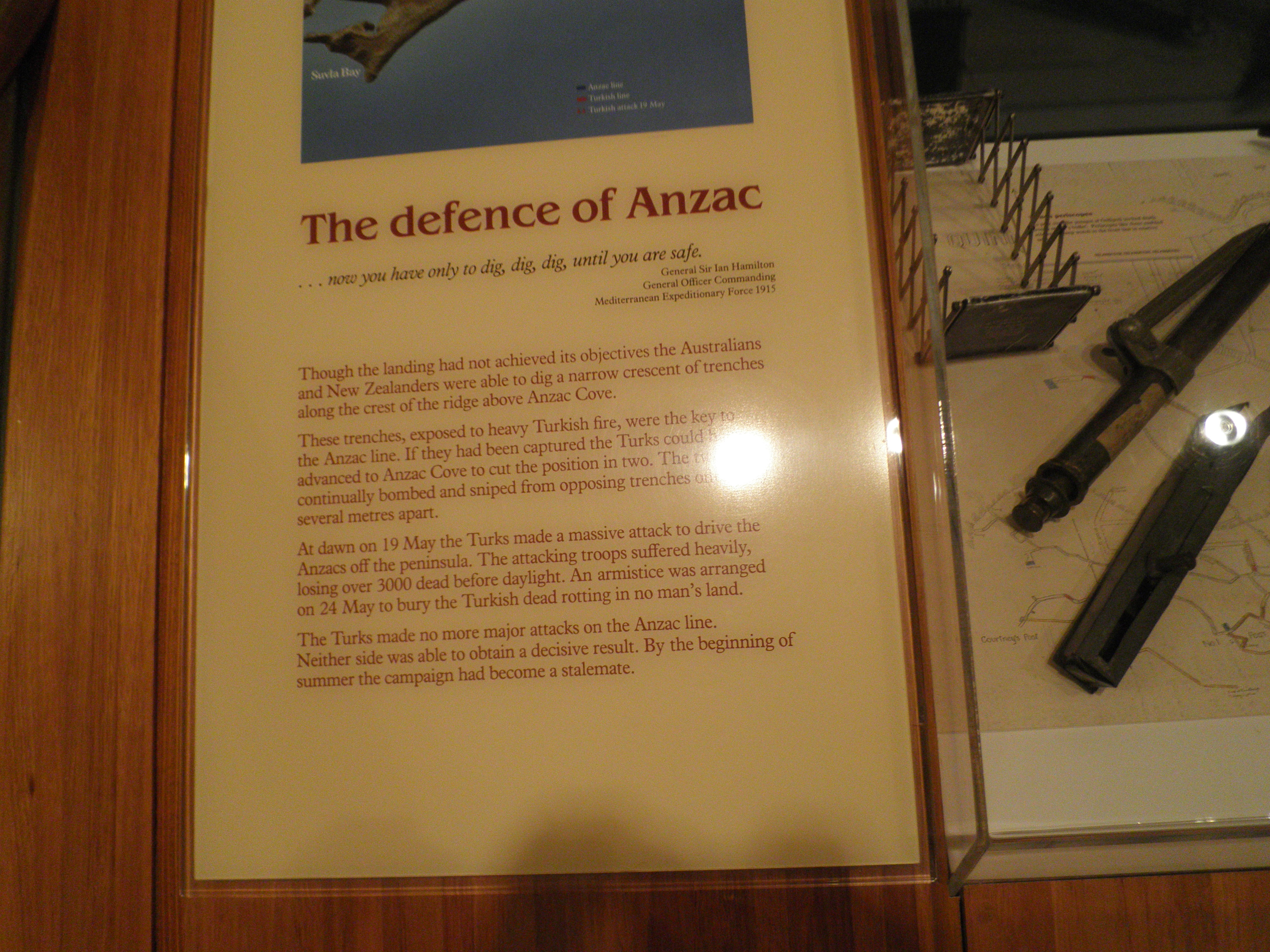
Richard Scutter 25 April 2011

Context … OLYMPUS DIGITAL CAMERA

… and here is a link to another poem

A Fixed Idea – Amy Lowell

Here is an early poem by Amy Lowell …

A Fixed Idea

What torture lurks within a single thought
When grown too constant; and however kind,
However welcome still, the weary mind
Aches with its presence. Dull remembrance taught
Remembers on unceasingly; unsought
The old delight is with us but to find
That all recurring joy is pain refined,
Become a habit, and we struggle, caught.
You lie upon my heart as on a nest,
Folded in peace, for you can never know
How crushed I am with having you at rest
Heavy on my life. I love you so
You bind my freedom from its rightful quest.
In mercy lift your drooping wings and go.

Amy Lowell

This poem is a Petrarchan sonnet with rhyming scheme ‘ABBAABBACDCDCD’.

The first eight lines give emphasis to the mind reflecting – thinking of a time when there was joy/delight. Thinking about it being a poor substitute to the actual experience … however the experience is such that you cannot get it out of the mind … it was that important and that emotionally charged that it dominates your life … in summary trapped in the dull pain of remembrance … the recurring joy is now ‘pain refined’. Interesting words defining the type of pain being experienced … to me it seems like a grieving … a loss has taken place and can never return. So it leads to questions such as – what to do to escape the relapse to the past? … how to incorporate a highly emotional experience in on-going living in a positive way?

The last six lines are the turn in the sonnet. Now we clearly know that this is a love experience and the lover (=you) is clearly identified. And you lie on the heart as a nest … you have made your home upon my heart and settled down at peace … but you don’t know how terrible this is to me now that you have gone … (we don’t know the circumstances – nor do we know whether the person concerned is alive or if alive whether he or she has any comprehension of how important the relationship was to the other person.)

This love can’t be ignored … a plea to find a way for it to be dissolved … for it to take flight as a bird leaving a nest. Drooping wings a very appropriate word … freedom is needed … for the wings to be activated.

Well how do you ‘deal with life’ after a relationship ends … after a death … after any other major event which dominates the mind.

And can you ever stop love?


Some Easter Words

Easter Sunday

The world is charged with the grandeur of God … Gerard Manley Hopkins
… – …
pure gold in blue sky
beauty of this risen day
touches all creation
… – …
Christmas is the birth
Easter – a life-time project ends
in non-ending life
… – …

Easter – the marriage of humanity and divinity through Jesus based on unconditional love.
… love does not alter when alteration finds … Shakespeare Sonnet 116

Celebrate LIFE … shockingly beautiful.

 Enjoy today – Every day.

… from last year

 … And a link to the personal poem ‘Infinite Glory’ … an alternative title to this poem –  ‘I let your beauty’ depending on the secular/non-secular perspective.

Nativity – James McAuley

Nativity

The thin distraction of a spider’s web
collects the clear cold drops of night.
Seeds falling on the water spread
a rippling target for the light.

The rumour in the ear now murmurs less,
the snail draws in its tender horn,
the heart becomes a bare attentiveness,
and in that bareness light is born.

James McAuley

I like this simple expression of the lead up to the Christmas birth in terms of light and the break of a new day.

A spider’s web is of course thin and its purpose is to entrap insects so collecting clear cold drops of water is in that sense a distraction. I think many would identify with the image of seeing spider webs glisten with dew in the early morning light. And who hasn’t seen seeds falling on water. But these seeds are falling before daybreak waiting for light to illuminate.

The rumour of Christmas decreases with the approach to the birth just as the snail withdraws its tender horn aware of the imminent approach of damaging light. The heart and nature in general is attentive to the coming break of day. How appropriate to consider this as bare and in this bareness light is born.

The response of nature to the breaking first light is an everyday event but is the first light of Christmas Day different from any other day and to what extent was the birth of Christ anticipated by nature or indeed part of a natural evolution.

I think James McAuley’s words indicate something quite special – consider the title, nativity and the link of the birth of light to the birth of Christ.

Footnote –

James Phillip McAuley was an Australian academic, poet, journalist, literary critic and a prominent convert to Roman Catholicism.

Wikipedia link – James McAuley