L’Envoi – Robert William Service

This is a follow up from my previous Post showing the full poem by Robert William Service.

 L’Envoi

We talked of yesteryears, of trails and treasure,
Of men who played the game and lost or won;
Of mad stampedes, of toil beyond all measure,
Of camp-fire comfort when the day was done.
We talked of sullen nights by moon-dogs haunted,
Of bird and beast and tree, of rod and gun;
Of boat and tent, of hunting-trip enchanted
Beneath the wonder of the midnight sun;
Of bloody-footed dogs that gnawed the traces,
Of prisoned seas, wind-lashed and winter-locked;
The ice-gray dawn was pale upon our faces,
Yet still we filled the cup and still we talked.

The city street was dimmed. We saw the glitter
Of moon-picked brilliants on the virgin snow,
And down the drifted canyon heard the bitter,
Relentless slogan of the winds of woe.
The city was forgot, and, parka-skirted,
We trod that leagueless land that once we knew;
We saw stream past, down valleys glacier-girted,
The wolf-worn legions of the caribou.
We smoked our pipes, o’er scenes of triumph dwelling;
Of deeds of daring, dire defeats, we talked;
And other tales that lost not in the telling,
Ere to our beds uncertainly we walked.

And so, dear friends, in gentler valleys roaming,
Perhaps, when on my printed page you look,
Your fancies by the firelight may go homing
To that lone land that haply you forsook.
And if perchance you hear the silence calling,
The frozen music of star-yearning heights,
Or, dreaming, see the seines of silver trawling
Across the sky’s abyss on vasty nights,
You may recall that sweep of savage splendor,
That land that measures each man at his worth,
And feel in memory, half fierce, half tender,
The brotherhood of men that know the North.

Robert William Service (1874 - 1958)
from Ballads of a Cheechako (Book 4)

Robert Service was a Canadian explorer who went into the Arctic and the Yukon in particular. Hence the need for Mawson to change North into South in the third stanza.

Here are some details from Wikipedia …

Robert William Service was an English-born Canadian poet and writer, often called “The Bard of the Yukon” and “The Canadian Kipling”.[2] Born in Lancashire of Scottish descent, he was a bank clerk by trade, but spent long periods travelling in the west in the United States and Canada, often in poverty. When his bank sent him to the Yukon, he was inspired by tales of the Klondike Gold Rush, and wrote two poems, “The Shooting of Dan McGrew” and “The Cremation of Sam McGee“, which showed remarkable authenticity from an author with no experience of the gold rush or mining, and enjoyed immediate popularity.

Encouraged by this, he quickly wrote more poems on the same theme, which were published as Songs of a Sourdough (re-titled The Spell of the Yukon and Other Verses in the U.S.), and achieved a massive sale. When his next collection, Ballads of a Cheechako, proved equally successful, Service could afford to travel widely and live a leisurely life, basing himself in Paris and the French Riviera.

Partly because of their popularity, and the speed with which he wrote them, his works were dismissed as doggerel by the critics, who tended to say the same of Rudyard Kipling, with whom Service was often compared. This did not worry Service, who was happy to classify his work as “verse, not poetry.”

LÉnvoi – the sending forth

Looking at the poem it is all about comradeship after days of coping with the extreme environment of the Yukon. The lines give reference to treasure and the discovery of gold. Survival as a team working in such arduous conditions is portrayed in the lines. And Mawson could readily relate to these lines on his explorations. And the talk around the campfire at the end of the day and how they coped.

This work will aways remain as a fitting memorial to the life of those early explorers who ventured into the frozen extremes of our world.

There is an exhibition on the Antarctica at the Australian National Museum Canberra until 11 October 2026. I took the following image on a comment on Books and magazines made by Douglas Mawson. The Adélie penguin is a common species of penguin.

… and here is the Macquarie Island Romping Song that the explorers used to sing …

Poetic Words from Sir Douglas Mawson

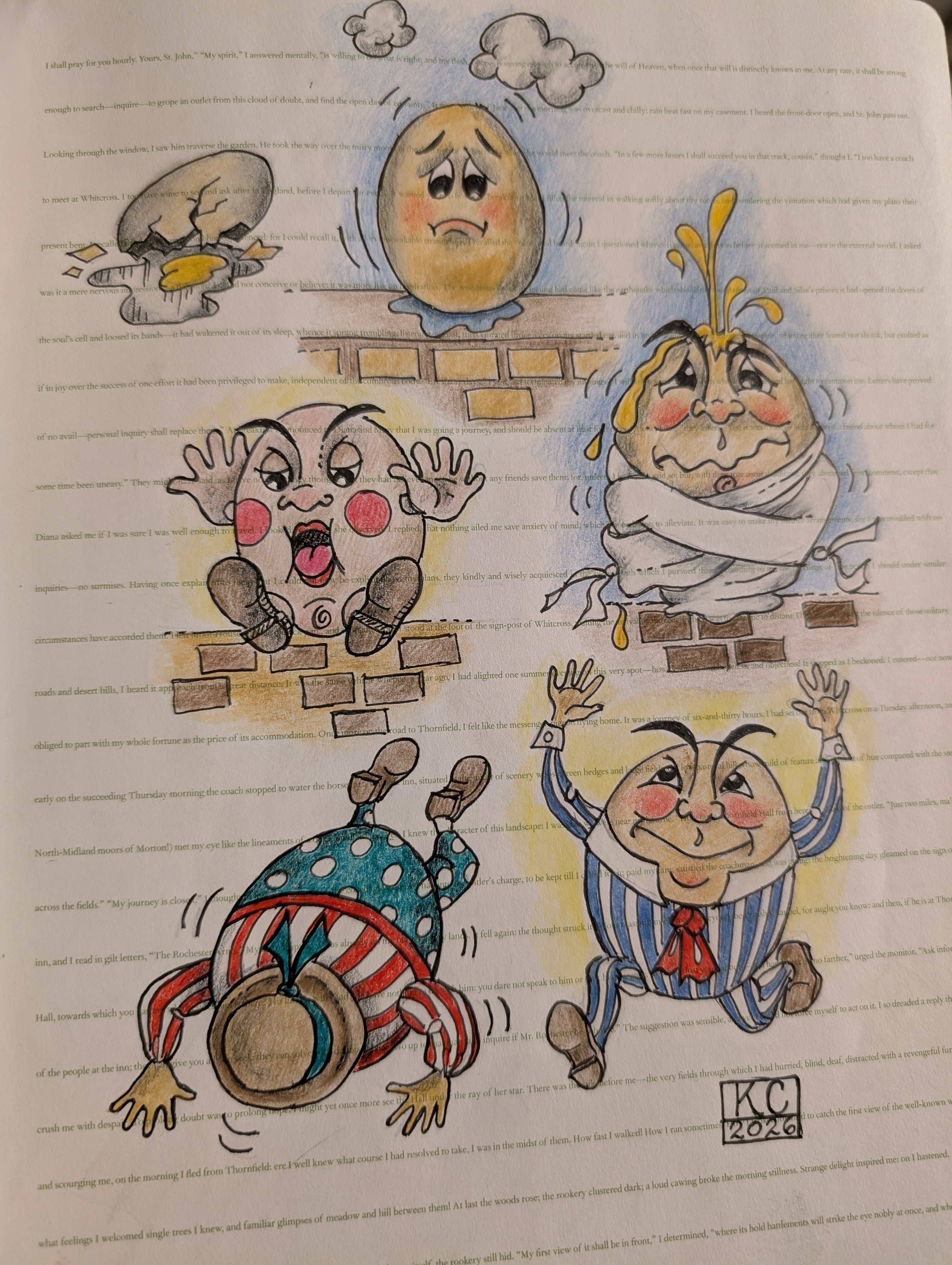
Below is a portion of a poem by Robert Service used by Sir Douglas Mawson (1882 – 1958) written in his own hand in a book from the John King Davis Collection at the Australian Antarctic Division library, at the end of the poem he makes an apology to Robert Service – a poet he admired, because he put in his own alteration – he changed the word “North” to “South” – to suit his own Antarctic exploits.

The original Robert Service poem is L’Envoi –  published in the volume “Ballads of a Cheechako”  in 1907.    Mawson had this book, and “Songs of a Sourdough” with him in Antarctica on the Australasian Antarctic Expedition, as well as Service’s novel The Trail of 1898.  They were often read aloud after dinner in the Huts.

Perhaps when on my printed page you look,

Your fancies by the fireside may go homing

To that lone land where bravely you endured.

And if perchance you hear the silence calling.

The frozen music of star-yearning heights,

Or, dreaming, see the seines of silver trawling

Across the ships abyss on vasty nights,

You may recall that sweep of savage splendor,

That land that measures each man at his worth,

And feel in memory, half fierce, half tender,

The brotherhood of men that know the South.

Apologies to Service—

D.M.

seine = large fishing net

In a few words the above lines define the foreboding environment in the many months he endured such harsh conditions as home in that sweep of savage splendour. And the land that tests each man to the extreme of personal resource, a land exacting emotion both fierce and tender.

And for me Sir Douglas Mawson stands out of all the explorers that ventured into the Antarctica at the start of the last century. He was so lucky to have survived on three separate occasions, his survival story legendary.

He highlights the brotherhood of the small group of men that had that first-hand knowledge of Antarctica and he recalls the companionship essential for survival – never forgotten by him or by those that have only dim understanding when reading the extract.

Here is a link to those interested in reading more context … Sir Douglas Mawson on Wikipedia

The Donkey – G. K. Chesterton

The Donkey

With monstrous head and sickening cry
   And ears like errant wings,
The devil’s walking parody
   On all four-footed things.

When fishes flew and forests walked
   And figs grew upon thorn,
Some moment when the moon was blood
   Then surely I was born.

The tattered outlaw of the earth,
   Of ancient crooked will;
Starve, scourge, deride me: I am dumb,
   I keep my secret still.

Fools! For I also had my hour;
   One far fierce hour and sweet:
There was a shout about my ears,
   And palms before my feet.

G. K. Chesterton (1874 -1936)

This is really a poem for Palm Sunday. It always intrigues me to have such a brief one-week contrast from being king with the populace to being crucified by the same.

This poem shows the king of Palm Sunday riding through the streets on a donkey. His kingship articulated in such an obscure way. This is such a contrast from the violent-tank approach of the military taking forced control of the land.

Unfortunately, the donkey is representative of the devil as a ploy. Jesus of course conquers the devil, or should we say sin, so perhaps it is apt that he rides on top. But I must say I feel a little sorry for this poor animal and the way his body features are described in the discredit.

And then on Easter Sunday Jesus becomes the Christian King of love. And again, he is the king of the populace by the cancellation of the debt of sin.

In summary, two very different ways in which he shows his kingship completely independent of guns, tanks, and missiles.

Gilbert Keith Chesterton was an English writer, Christian apologist, and literary critic renowned for his wit, paradoxes, and defense of faith and tradition. Author of influential works like Orthodoxy, The Everlasting Man, and the Father Brown detective stories, he championed Catholic thought, distributism, and common sense in public debates. Converting to Catholicism in 1922, his apologetics profoundly impacted Christian thinkers including C.S. Lewis.

apologetics – reasoned arguments or writings in justification typically a theory or religious doctrine:

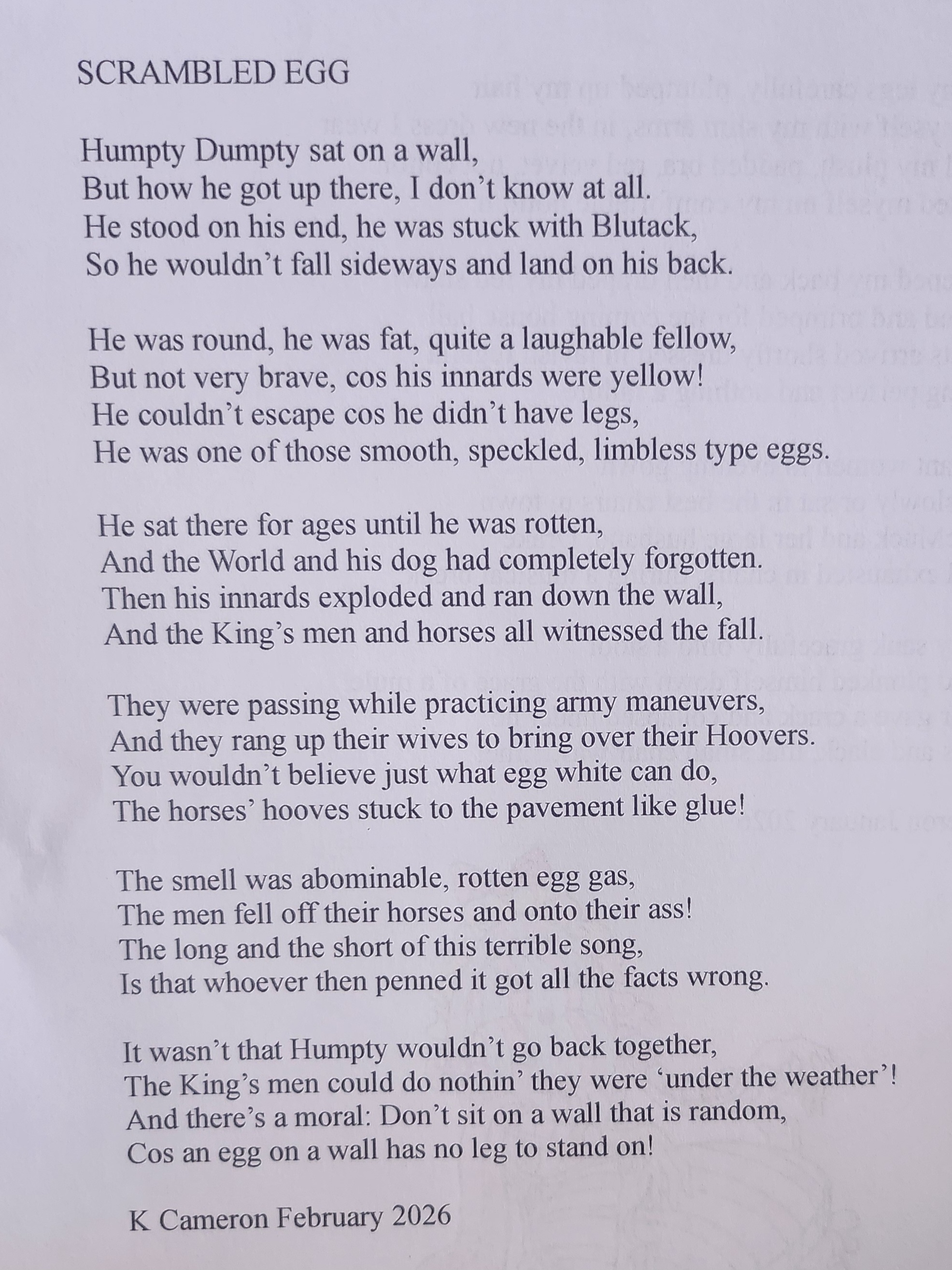
Scrambled Egg – Kate Cameron – Yass Valley Writers

Time for a touch of humour …


Kate Cameron is a member of The Yass Valley Writers. She is a very talented lady that exudes humour in her contributions to the group. Her creative drawings are always an entertaining addition to many of her poems. I attend the meetings and Kate has given me permission to share her work.

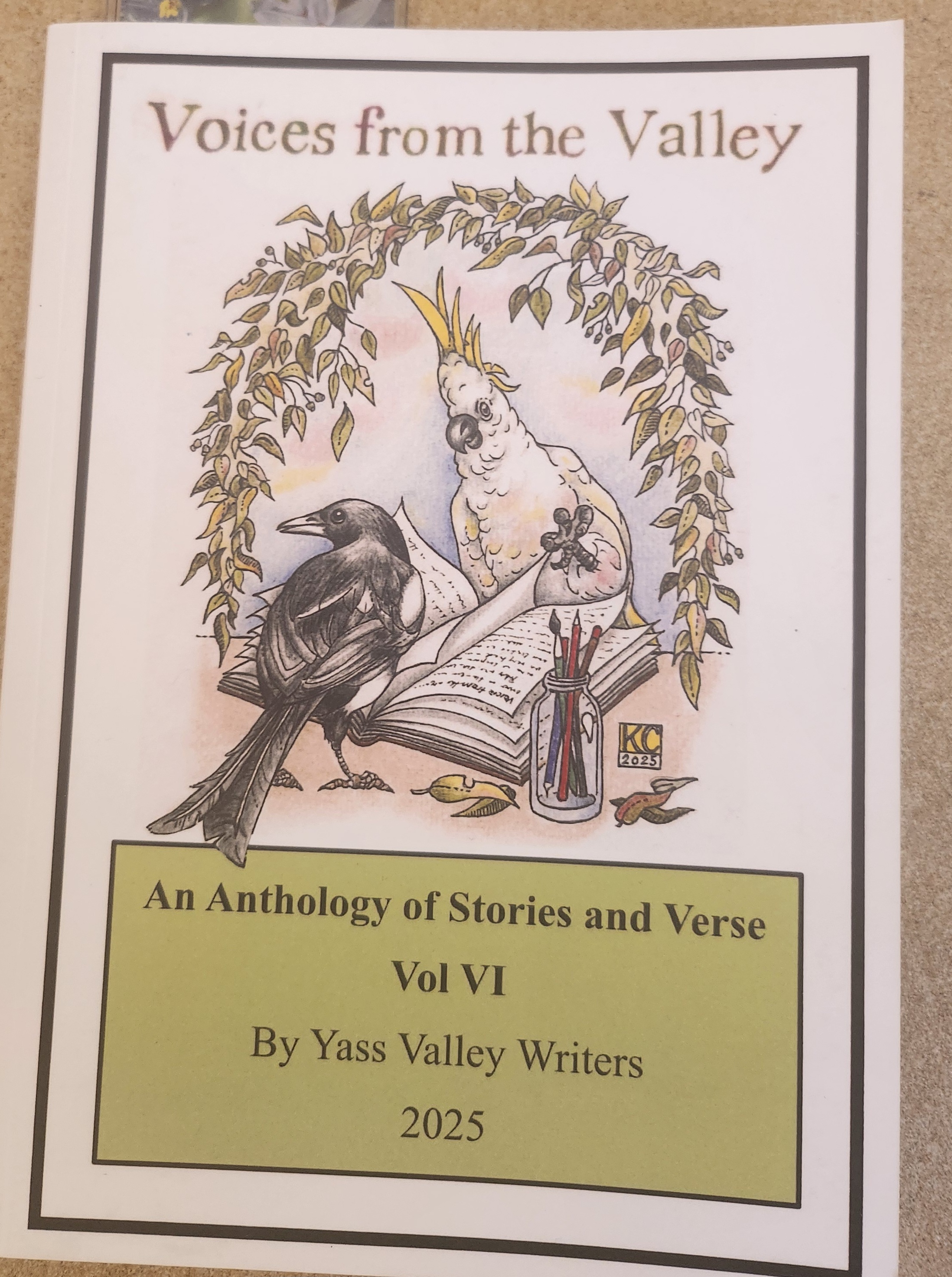
The Yass Valley Writers Group have recently produced their sixth anthology (Voices from the Valley) which is available via Amazon – see below. A diverse range of writing from seventeen of the members.

You – a poetic elaboration

I have been considering the one-word poem YOU. It is up to the reader or listener to meditate/associate/respond according to the receptive nature of that individual person at the time of reading or hearing. That is, if that person has time to contemplate such a poem in the busy 24 by 7 world of today.

Here are some positives in relation to such a poem to stimulate thought –

Subject and Object: The beloved is both the reason for the poem and its entire content. They are not just being addressed — they are the poem.

Economy of Expression: It says, “Nothing else matters. Only you.”

Devotion: It’s a surrender — the lover reduces the infinite complexity of love to a single, defining presence: you. If it is a lover that is being addressed by this word.

Mirror: It can also be a reflection — the beloved might see themselves in the poem, but also see the lover’s entire being poured into that word.

Timelessness: Unlike longer poems, it doesn’t age or tire; it remains whole and immediate

I have expanded the one-word poem into the following to give more poetic expression. But again, the subject and object of the poem depends on the reader/listener for interpretation.

                                           
YOU

I wrote a hundred lines.
Burned them.
Too many metaphors.
Too many ways to almost say it.
Then I wrote your name.
Once.
Paused.

The page stared back —
full.
Complete.
Crowded, even.
Everything empty
nothing
except

and you read it
                  as if I’d hidden more,
                         but there is no more to say


What can I say … enjoy being you … whoever and wherever you are. And thanks for reading this Post. You are important; essential in keeping poetry alive.

.

A one-word poem – Boring

I was on duty trying to entertain my eleven-year-old granddaughter when she came back from school.

She knows I am interested in words and poetry. When I started to broach that subject the response was one word -Boring.

I said to her that words are important. The words that you use say something about you. And of course choosing the best word and placing it in the appropriate location is always the aim of the poet.

Well, the one-word response was Boring. And then as though she wanted to emphasis her response she repeated Boring several times. You could say she created a one-word poem.

I guess this eleven-year-old finds grandfather totally boring. Wendy Cape was in that boring state with nothing creative on her mind. So she used that emotive feeling to create a boring poem.

Being Boring
'May you live in interesting times.' Chinese curse
If you ask me 'What's new?', I have nothing to say
Except that the garden is growing.
I had a slight cold but it's better today.
I'm content with the way things are going.
Yes, he is the same as he usually is,
Still eating and sleeping and snoring.
I get on with my work. He gets on with his.
I know this is all very boring.
There was drama enough in my turbulent past:
Tears and passion - I've used up a tankful.
No news is good news, and long may it last.
If nothing much happens, I'm thankful.
A happier cabbage you never did see,
My vegetable spirits are soaring.
If you're after excitement, steer well clear of me.
I want to go on being boring.
I don't go to parties. Well, what are they for,
If you don't need to find a new lover?
You drink and you listen and drink a bit more
And you take the next day to recover.
Someone to stay home with was all my desire
And, now that I've found a safe mooring,
I've just one ambition in life: I aspire
To go on and on being boring.
Wendy Cope (1945 -

Wendy Cape is renowned for her humorous poems. She is happy to be a cabbage. An appropriate metaphor. A cabbage just responds to soil and temperature. It can be a little annoying when the same friend always starts the conversation – “What have you been doing”.

What can I say, I hope you are coping (forgive the pun) with all that is happening in the world.

Wendy Cope on Wikipedia

The eternal language of words …

The eternal language of words … after a recent visit to the Ancient Egypt Discovery Exhibition in Canberra at the National Museum of Australia showing exhibits from the Dutch National Museum of Antiquities (Rijksmuseum van Oudheden) …

… the importance of words … unknown by those who created them centuries ago … leaving words behind … they didn’t know that their words would have significance … the past defined by the written language of the day … and the language of the past influencing the progression of on-going life … telling its story of the life of the day …  and wisdom and knowledge filtered forever flowing forward … in the beginning was the word and the word is life eternal

 … what equivalent eternal Shakespeare words that crease the pages of today will be of similar significance to future generations?

The foyer of the National Museum of Australia

Ancient Egyptian letters being investigated

And looking at some ancient Egyptian love poems – https://mywordinyourear.com/2021/11/07/ancient-egyptian-love-poems-john-l-foster-translator/

A Room of One’s Own – Virginia Woolf

A Room of One’s Own is an extended essay by Virginia Woolf, first published in September 1929. The work is based on two lectures Woolf delivered in October 1928 at Newnham College and Girton College, women’s colleges at the University of Cambridge. It is an emphatic statement on emancipation and empowerment of women. And it clearly articulates the personal restrictions of being a woman in the life of Virginia Woolf. If you want to see the improvement that has been made in recognition of women compare the restrictive time of the early twentieth century in England.

But I was interested to see what she had to say about books and writing. And in particular how such written expression has the ability to enhance reality in the sharing of human experience. The following is an extract from her essay encouraging women to write.

There runs through these comments and discursions the conviction—or is it the instinct? — that good. books are desirable and that good writers, even if they show every variety of human depravity, are still good human beings. Thus when I ask you to write more books I am urging you to do what will be for your good and for the good of the world at large. How to justify this instinct or belief I do not know, for philosophic words, if one has not been educated at a university, are apt to play one false. What is meant by 'reality'? It would seem to be something very erratic, very undependable—now to be found in a dusty road, now in a scrap of newspaper in the street, now a daffodil in the sun. It lights up a group in a room and stamps some casual saying. It overwhelms one walking home beneath the stars and makes the silent world more real than the world of speech—and then there it is again in an omnibus in the uproar of Piccadilly. Sometimes, too, it seems to dwell in shapes too far away for us to discern what their nature is. But whatever it touches, it fixes and makes permanent. That is what remains over when the skin of the day has been cast into the hedge; that is what is left of past time and of our loves and hates. 

Now the writer, as I think, has the chance to live more than other people in the presence of this reality. It is his business to find it and collect it and communicate it to the rest of us. So at least I infer from reading Lear or Emma or La Recherche du Temps Perdu. For the reading of these books seems to perform a curious couching operation on the senses; one sees more intensely afterwards; the world seems bared of its covering and given an intense life. Those are the enviable people who live at enmity with unreality; and those are the pitiable who are knocked on the head by the thing done without knowing or caring. So that when I ask you to earn money and have a room of your own, I am asking you to live in the presence of reality, an invigorating life, it would appear, whether one can impart it or not.

What would life be like if we didn’t have books and written words in general to surround us and give us meaning. No matter in what form a person writes and whether or not the legacy of work deemed as literature. As I sit in my study I am surrounded by the living thoughts and life expression of so many different people and I give a big thankyou. Equally I encourage others to share the reality of an envigorating life in such manner.