I remember, I remember – Philip Larkin – Analysis

I Remember, I Remember

Coming up England by a different line
For once, early in the cold new year,
We stopped, and, watching men with number plates
Sprint down the platform to familiar gates,
“Why, Coventry!” I exclaimed. “I was born here.”

I leant far out, and squinnied for a sign
That this was still the town that had been ‘mine’
So long, but found I wasn’t even clear
Which side was which. From where those cycle-crates
Were standing, had we annually departed

For all those family hols? . . . A whistle went:
Things moved. I sat back, staring at my boots.
‘Was that,’ my friend smiled, ‘where you “have your roots”?’
No, only where my childhood was unspent,
I wanted to retort, just where I started:

By now I’ve got the whole place clearly charted.
Our garden, first: where I did not invent
Blinding theologies of flowers and fruits,
And wasn’t spoken to by an old hat.
And here we have that splendid family

I never ran to when I got depressed,
The boys all biceps and the girls all chest,
Their comic Ford, their farm where I could be
‘Really myself’. I’ll show you, come to that,
The bracken where I never trembling sat,

Determined to go through with it; where she
Lay back, and ‘all became a burning mist’.
And, in those offices, my doggerel
Was not set up in blunt ten-point, nor read
By a distinguished cousin of the mayor,

Who didn’t call and tell my father There
Before us, had we the gift to see ahead –
‘You look as though you wished the place in Hell,’
My friend said, ‘judging from your face.’ ‘Oh well,
I suppose it’s not the place’s fault,’ I said.

‘Nothing, like something, happens anywhere.’

Philip Larkin

What a different poem from the poem with the same title as that by Thomas Hood. I can’t help thinking that Larkin chose the title with Hood’s poem in mind to give an honest statement of his unhappy childhood experience. Coming up England by a different line – a very clever way of saying his lines are markedly different from the ideal country exprience exressed in Hood’s nostalgic escapist lines.

Men with number plates an intersting way of saying they owned a car – perhaps it was their pride and joy in running down the platform to make contact – or perhaps congestion was a problem in the parking area.

Well his childhood was a disappointment – where my childhood was unspent – time is equated to money and money value. And in replying to a fellow traveller makes synical comment – wasn’t spoken to by an old hat – (by adults who should have given explanation), I never ran to when I got depressed – (no emotional connection with family). Larkin concentrates on the things that didn’t happen that he thought would be common in other families.

Their Comic Ford, their farm – the other children created their own imitation reality – which to Larkin was comic and I think he was being synical by saying he could be ‘really himself”. And laments no sexual contact with the girls who were all chest, the boys all biceps. Perhap he had a different emphasis – his doggerel was not set up – like that of other children who had recognition nor read By a distinguished cousin of the mayor and given feedback that they were gifted.

And that great last line – ‘Nothing, like something, happens anywhere.’ The place itself, Coventry, is not at fault.

Apart from the clever word play slant the pentameter and rhyming construct shows that Larkin put a lot of work into this expression of his childhood – ensuring that his experience will be remembered by the many who treasure Larkin as a top poet.

The Flame Tree – Judith Wright – Comments

Flame Tree

How to live, I said, as the flame tree lives?
– to know what the flame tree knows: to be
prodigal of my life as that wild tree
and wear my passion so.
That lover’s knot of water and earth and sun,
that easy answer to the question baffling reason,
branches out of my heart, this sudden season.
I know what I would know.

How shall I thank you, who teach me how to wait
in quietness for the hour to ask or give:
to take and in taking bestow, in bestowing live:
in the loss of myself, to find?
This is the flame-tree; look how gloriously
That careless blossomer scatters, and more, and more.
What the earth takes of her, it will restore.
These are the thanks of lovers who share one mind.

Judith Wright

This year is the centenary of the birth of Judith Wright.

In Sydney at Circular Quay there are commemorative circular plaques of famous Australian literary people embedded in the walkway to the Opera House. Below is Judith Wright’s – it needs updating as Judith died in 2000. The words featured are in relation to her work as an activist in establishing aboriginal rights.

JudithWrightPlaque

… and here is a link to the sculpture of Judith Wright in Garema Place Canberra where the ‘Flame Tree’ poem is featured. It was taken at the official opening of ‘Poets Corner’ on 30 January 2012 – http://richard-outoftheblue.blogspot.com.au/2012/01/poets-corner-official-opening-canberra.html.

The above poem is typical JW personification with nature. Here she advocates throwing everything into life. Follow your heart and be prodigal (reckless) compared to a more controlled approach. I know the flame-tree is very profuse in its flowering. Perhaps ‘we’worry too much about our own flowering without just letting it just happen. If we give in abundance perhaps that which is taken will be given back in greater measure – you will have to be the judge of that of course. JW says ‘I know what I would know’ – expressing confidence that this prodigal approach would promote knowledge.

A link to the Illawarra Flame Tree … http://en.wikipedia.org/wiki/Brachychiton_acerifolius

Judith Wright on Wikipedia – http://en.wikipedia.org/wiki/Judith_Wright

Growing Poetry – Oranges and Lemons?

OrangesAndLemons

Growing the Poetry

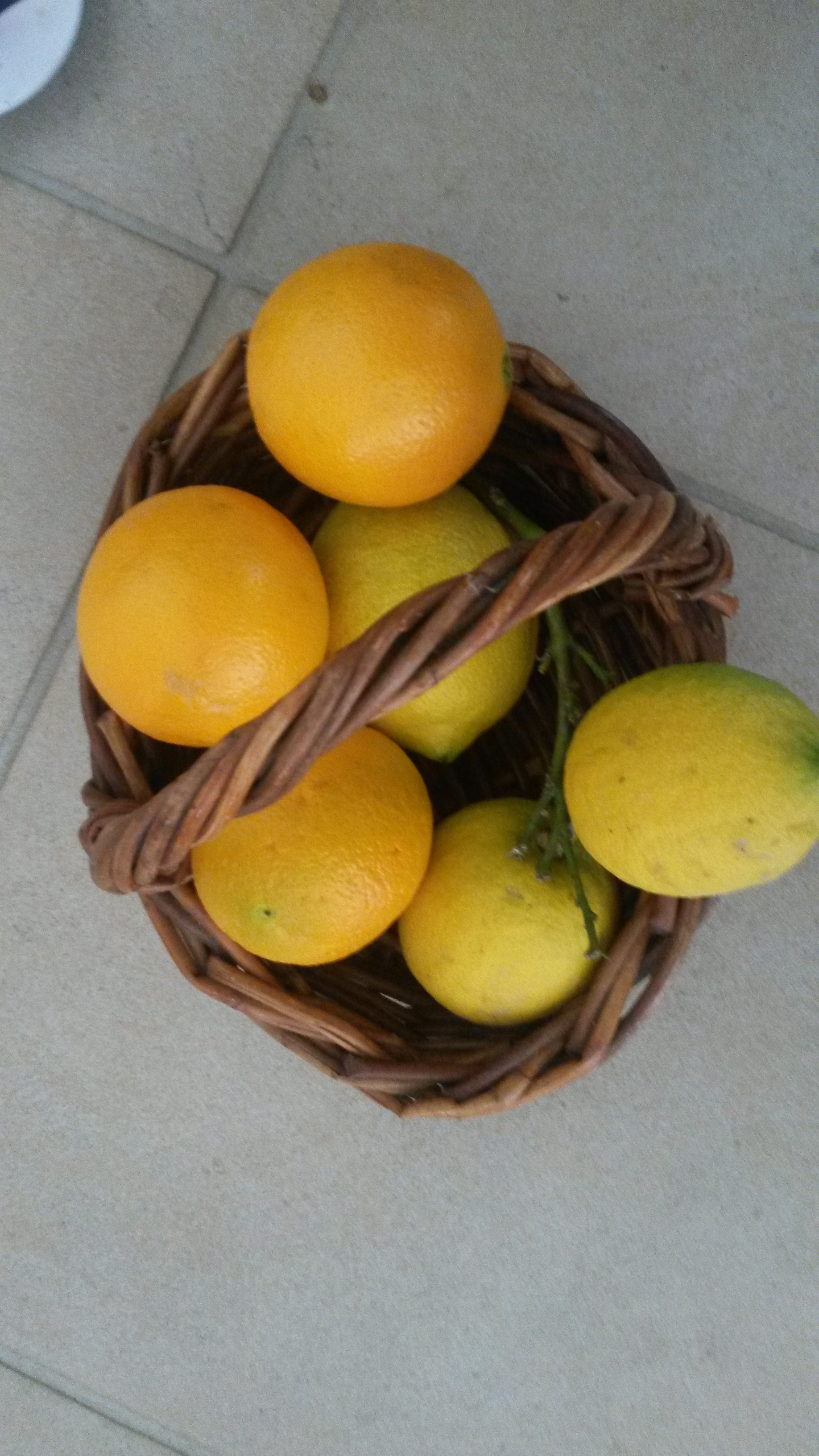
1 Oranges and lemons
Say the bells of St Clement’s

Poetry is a rather difficult fruit to grow.
First things first, you must be very mindful
of the nutrients needed for germination.
Then, of course, you have to wait.

It’s no good rushing into things. When
the ground breaks be prepared to spend
time nurturing. Pruning is often needed.
Letting light into the branches is essential
to ensure the whole tree benefits.

Eventually fruit will start to form.
It is up to you to taste first. Then you
might feel like sharing with a friend.

At harvest time you could market
hoping to find others who appreciate
what you have to offer. But beware
not everybody loves lemons!

1 When will you pay me?
Say the bells of Old Bailey.

Richard Scutter

Footnote –

1 Traditional English Nursery Song

I think you allways need to be a little thick-skinned because whatever fruit you produce will not be to everybodies taste – that does not matter – oranges and lemons.

I ask you – Billy Collins

I ask you

What scene would I want to be enveloped in
more than this one,
an ordinary night at the kitchen table,
floral wallpaper pressing in,
white cabinets full of glass,
the telephone silent,
a pen tilted back in my hand?

It gives me time to think
about all that is going on outside–
leaves gathering in corners,
lichen greening the high grey rocks,
while over the dunes the world sails on,
huge, ocean-going, history bubbling in its wake.

But beyond this table
there is nothing that I need,
not even a job that would allow me to row to work,
or a coffee-colored Aston Martin DB4
with cracked green leather seats.

No, it’s all here,
the clear ovals of a glass of water,
a small crate of oranges, a book on Stalin,
not to mention the odd snarling fish
in a frame on the wall,
and the way these three candles–
each a different height–
are singing in perfect harmony.

So forgive me
if I lower my head now and listen
to the short bass candle as he takes a solo
while my heart
thrums under my shirt–
frog at the edge of a pond–
and my thoughts fly off to a province
made of one enormous sky
and about a million empty branches.

Billy Collins – American Poet Laureate 2001 – 2003

I love how Billy Collins takes the ordinary in life and colours it with his wild imagination combining the seemingly disconnected everyday scraps of existence into a worthy world of word pleasure – laying his work before us in his own inimitable style – always there is a touch of the unusual in his offerings as well as a philosophical acceptance of the foibles in human nature – plus that essential ingredient subtle humour.

And looking at the above ‘I ask you’ poem. I do like poetry that poses a question – even if he is talking to himself – isn’t it marvellous when we are content where we are in life?

And considering the second stanza –

while over the dunes the world sails on,
huge, ocean-going, history bubbling in its wake.

And of course the world does sail on the ‘waters’ of the past – but hopefully we make a bit of headway as the future disappears behind us and we add to the flow – but let the world sail on – and not worry about all the problems that beset our troubled world!

He shows his poetic skill to give the contrast between a few moments in a kitchen compared to all history … and those few ordinary moments, where you have time to yourself and to think, can be so precious and rejuvenating in the busy world of today.

Enjoy your own presence in the warm comfort and intimacy of your own being – where ever you are – and so I ask you to just sit back for a few moments … and I hope you can take a deep breath and slowly say to yourself life is very agreeable, in fact quite beautiful!

Japanese Maple – Clive James – Comments

Clive James is nearing the end of his life. Last year he wrote the poem ‘Japanese Maple’ and he had time to put a lot of thought into the text. It is very much a testimony of his personal state at that time as he considered his approaching ending.

I have broken the poem into six stanzas of four lines and then the closing line. My comments in italics …

‘Japanese Maple’

Your death, near now, is of an easy sort.
^ ^ ^ ^ ^ / ^ ^ ^^ ^
So slow a fading out brings no real pain.
^ ^ ^ ^^ / ^ ^ ^ ^ ^
Breath growing short
^ ^^ ^
Is just uncomfortable. You feel the drain
^ ^ ^^^^ / ^ ^ ^ ^
If you have read his ‘Poetry Notebook’ you will be aware how much he appreciates form and it is not surprising to encounter rhyme and rhythm and the attention to the syllable structure. But what I like is the break in the third line corresponding to his difficulty in breathing. You can join his shortness in breath when reading that line. Clearly, at the time of writing, he was not in pain.

Of energy, but thought and sight remain:
Enhanced, in fact. When did you ever see
So much sweet beauty as when fine rain falls
On that small tree

In fact he is experiencing a golden time in the highlighting of his senses. And looking at the Japanese maple in the light rain gives great joy – he obviously has to spend time sitting observing because of his failing health. And again we see that short line occur.

And saturates your brick back garden walls,
So many Amber Rooms and mirror halls?
Ever more lavish as the dusk descends
This glistening illuminates the air.

And he can watch the changing garden as night approaches and find delight in little things such as the way the falling light picks up the wet precipitation. (The Amber Room is a world famous chamber decorated in amber panels backed with gold leafs and mirrors, located in the Catherine Palace of Tsarskoye Selo near Saint Petersburg. – from Wikipedia)

It never ends.
Whenever the rain comes it will be there,
Beyond my time, but now I take my share.
My daughter’s choice, the maple tree is new.

This time the short line is at the start. Reflective words on not being around – nature will continue regardless of his demise – then reflecting again, this time bringing to mind his daughter who chose the tree.

Come autumn and its leaves will turn to flame.
What I must do
Is live to see that. That will end the game
For me, though life continues all the same:

Then looking to the future, how the tree will look in autumn and setting a goal to see the autumn colours– that will be sufficient. (He did achieve this).

Filling the double doors to bathe my eyes,
A final flood of colours will live on
As my mind dies,
Burned by my vision of a world that shone

He know equates his very last days with the ‘flood of colours’ – colours that will live on. His mind is ‘burned’ showing how much value he has taken from the world – a shining world -and more recently appreciating the ‘flame’ of the tree.

So brightly at the last, and then was gone.

And the last line with emphasis on how much joy he has encountered in his end days. It is interesting that his enforced change of pace due to illness has given him a new perspective on life and time to really appreciate his limited environment and to look back on the beauty of life with gratitude.

Clive James

Rhyming scheme – abab bcdc ddea eaaf ghgg ijij j

Clive James would like to be more known as a poet and he is a very fine poet but I guess he will be better known as a broadcaster and commentator with that wry twist and sardonic humour. But this poem will surely be one of his classics.

Here is a link to his Website – http://www.clivejames.com/ and a link to information about Clive James on Wikipedia – http://en.wikipedia.org/wiki/Clive_James

‘Old Mother Hubbard’ – contemplation of text

I recently came across a copy of ‘The Standard Comic Reciter’ – quite an old book and I have yet to find the date of publication (around 1900). But it contains the article ‘Old Mother Hubbard’ from ‘Children of Nature, A Story of Modern London (1878)’ by the late Earl of Desart (by kind permission of Ellen, Countess of Desart.) He was the fourth Earl and died in 1898. The Earl was a literary man who wrote 15 novels. The Countess of Desart went on to become a politician in her own right and died in June 1933, aged 75.

The whole article is an exploration of the first four lines of the well-known nursery rhyme ‘Mother Hubbard’.

‘Old Mother Hubbard, she went to the cupboard,
To get her poor dog a bone;
But when she got there the cupboard was bare,
And so the poor dog had none.’

The article is dedicated to an interpretation of these lines with resultant meaning applicable to everyday life. Looking at the bare bones of his discourse (sorry about that!) with some added interpretation …

Old = the assumption made is that she is a widow and lives alone
She went = she did not deviate from her focus of intent
The cupboard = the emphasis is on the word ‘the’ indicating that she only had one cupboard and it had that important food function
Poor = poor to me indicates that the dog is hungry, an assumption is made that the woman is poor as well as the dog.
Mother = no mention is made of the fact she is a mother, whether or not her children are still around is another matter, and bound to the house as carer would be understood by those reading the text at the time it was written.

It is assumed that she went to the cupboard with an expectation of finding a bone.

She got there = she achieved her goal
Bare = but shock, shock the cupboard is bare – we don’t know whether the door was open or not – and whether she had other things in the cupboard – we don’t know how the bone disappeared (and whether any other contents left the sceene – cakes, sweetbreads, hams etc.)
So the poor dog had none = a matter of fact statement … the old woman, perhaps very disappointed, concludes her task and leaving it behind does not dwell on her situation – this is the key to the Earl’s thought in his concluding lessons …

To avoid being widows (if possible)
To have more than one cupboard (if possible)
To avoid keeping dogs fond of bones (well, all dogs like bones – perhaps some like them too much!)
To accept the inevitable with calm steadfastness … this is indeed the whole crux of the matter – acccept the situation and no matter what happens in life just move on – the full stop at the end of the line is so important!

How many people continue to dwell on something that has happened in their life and can’t move on! Bringing it up time and time again … and again …

And of course I must add another lesson – a lot can be gleaned from very little text! As I am sure that those that write Haiku and Tanka would surely agree.

Note … From Wikipedia – Earl of Desart was a title in the Peerage of Ireland. It was created in 1793 for Otway Cuffe, 1st Viscount Desart. He had already succeeded his elder brother as third Baron Desart in 1767 and been created Viscount Desart, in the County of Kilkenny, in the Peerage of Ireland in 1781.).

Note also – this nursery rhyme has been equated to Henry VIII and his attempt to influence the Catholic Church (Cardinal Worsley) to get approval for a divorce from Catherine of Aragon so that he could marry Anne Boleyn.

The Trains – Judith Wright – Analysis – ANZAC Day

ANZAC Day 2015

TrainOfroses

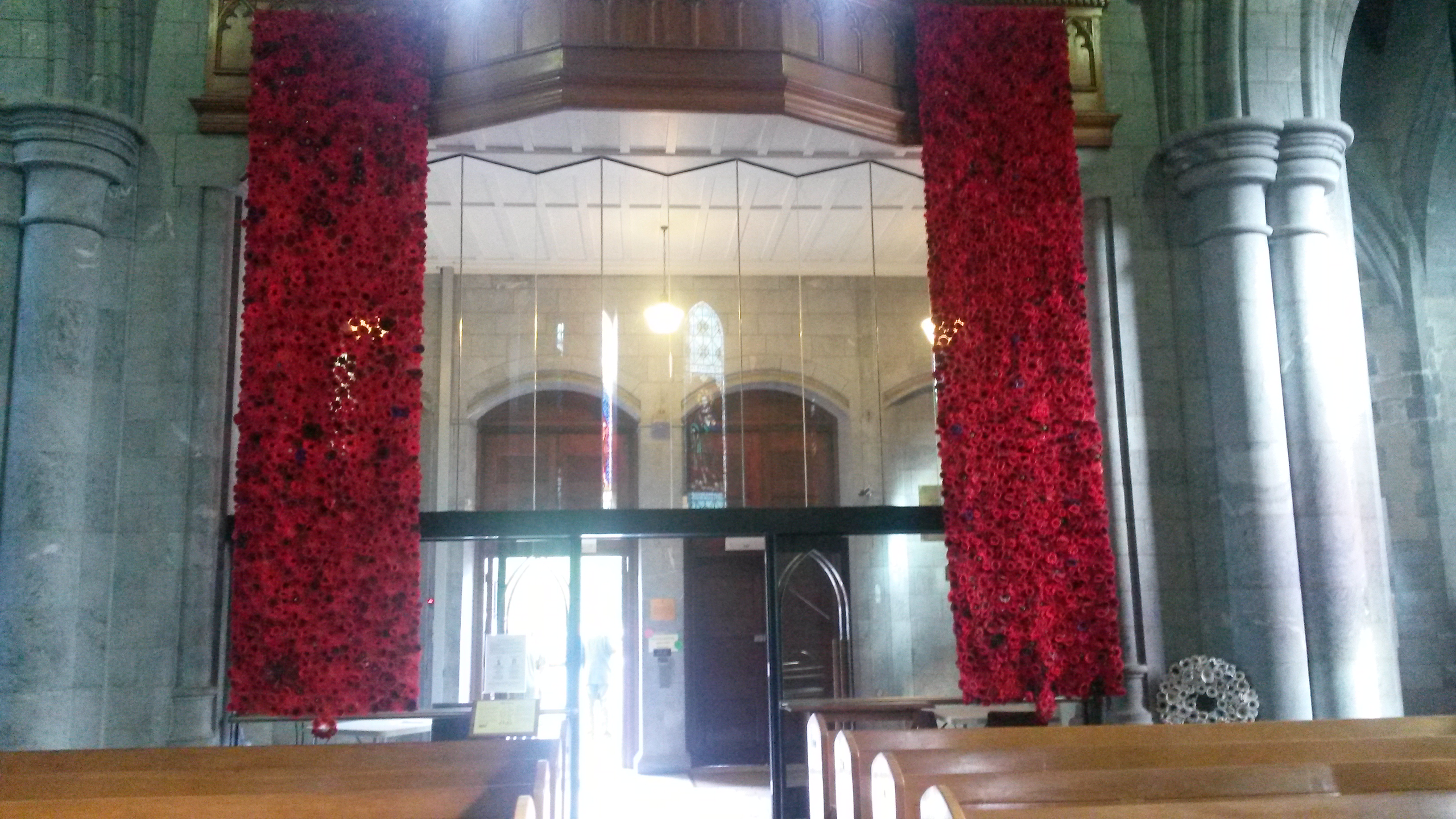
Two trains of roses have been placed down the inside the back wall at the entry of Nelson Cathedral, New Zealand.

The following is my choice of a war poem and it is ANZAC (Australian and New Zealand Army Corps) day today when the ‘World War 1 Gallipoli’ campaign is on the minds of Australians and New Zealanders. This year also marks hundred years since the birth of Judith Wright in 1915. This is a generic poem about pending dark days as war approaches.

The Trains

Tunnelling through the night, the trains pass
in a splendour of power, with a sound like thunder
shaking the orchards, waking
the young from a dream, scattering like glass
the old mens’ sleep, laying
a black trail over the still bloom of the orchards;
the trains go north with guns.

Strange primitive piece of flesh, the heart laid quiet
hearing their cry pierce through its thin-walled cave
recalls the forgotten tiger,
and leaps awake in its old panic riot;
and how shall mind be sober,
since blood’s red thread still binds us fast in history?
Tiger, you walk through all our past and future,
troubling the children’s sleep’; laying
a reeking trail across our dreams of orchards.

Racing on iron errands, the trains go by,
and over the white acres of our orchards
hurl their wild summoning cry, their animal cry….
the trains go north with guns.

Judith Wright

The first stanza reminds me of the time I was staying in a rondavel in a valley in South Africa when on the way to Durban. The trains disturbed my sleep as high up they trundled through tunnels in the hills making an eerie sound at the same time. Trains are very powerful images and coming suddenly at night representative of the foreboding onset of war. And more importantly these lines show how both old and young would be affected. The young might dream of adventure unknowing of the nature of war and being easily misled by any recruitment drive, whereas the old know only too well what is at hand and their hope for the the next generation is shattered like broken glass. The peace of the orchard is now clouded by the events which were unfolding represented by the trail of black smoke over white spring blossom. The trains are going north with guns and this was appropriate to the Australia situation as Darwin was first in line in the Second World War.

The second stanza likens the war-trait in the human condition to a tiger within the blood of all generations. It seems this tiger will always be present to trouble each generation and as in the first stanza reeking a trail across our dreams for peace (orchards). And how can mind be sober when it has to confront the terror of this tiger. It seems that the mind of man has to continually deal with war in whatever form. The last lines highligh the manic-force with which the war-cry manifests, represented by the trains travelling on iron errands, rather than iron rails. It is an animal cry reflecting the ever present unstoppable base elements of the human condition.

As the world gets smaller and smaller war and conflict is quicky brought to our attention by the media – wherever it is occuring, so you could say that ‘train-noise’ is a more frequent visitor to the background of the mind. Whether this awareness makes the world better equiped to deal with such situations is another matter – but we live in hope.

yesterday the earth shook
today there are poppies every where

We give thanks that we are lucky enough to live where peace prevails!

I have also commented on this poem on my previous Site.

   … and the following are links to previous ANZAC Day Posts …

Previous ANZAC Day words 2014

Previous ANZAC Day words 2013

The Weather Dictates? – and from New Zealand …

How much of poetry is dictated by the weather. Put another way how much does weather dictate poetry. I came across the following in a Hotel in New Zealand …

RainPoem

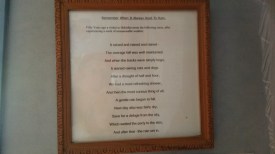
Here are the words from the above image …

Remember when it always used to rain. Fifty years ago a visitor to Hokitika (a town on the west coast of South Island) wrote the following after receiving a week of unseasonable weather.

It rained and rained and rained –
the average fall was well maintained.
and when the tracks were simply bogs
it started raining Cats and Dogs.
After a drought of half and hour,
we had a most refreshing shower,
and then the most curious thing of all
a gentle rain began to fall.
Next day was also fairly dry,
save for a deluge from the sky,
which wetted the party to the skin,
and after that the rain set in.

Well what do you  do when confined by the weather and nothing to do – this person vented his frustration in the above words – which probably forced a non-poet into such expression.

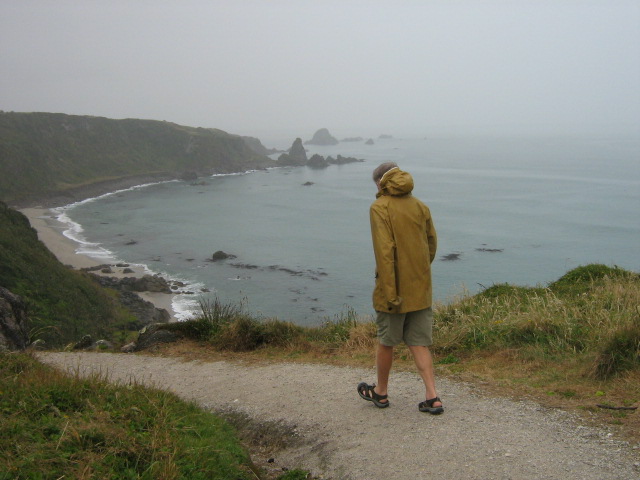
Here is a New Zealand poem written after walking on the cliffs at Cape Foulwind, Westport, South Island – and as the name suggests a most unhospitable place. However, the view of the seals playing on the rocks at the foot of cliffs was well worth the discomfort of the walk in the wet.

CapeFoulwindWalk

Cape Foulwind Walk

on a summer day winter crowds-in to submerge
the sky and sea sweep together enclosing thoughts
no imagination is needed for this foul named place
this country continually perforated by wind driven rain

the weather deepens impregnating every footstep
the old gortex has had its day and dampens from the inside
but the path is set along the cliffs to the promised sight of seals
as wekas scout around before darting to their rabbit hole existence

then that point is reached when saturated by the wet
there is a resigned acceptance absorbed to the conditions
but when wailing gutteral sounds waft up in the squall
thoughts turn inside out to the rocks far below

oblivious of any impending storm, with thick skin immunity,
at home, on vacant rock spaces, in waterhole pools,
and indolent in the continual spray of the Tasman chunder,
the seals slub around regardless, in elemental play

Seal

Richard Scutter 15 March 2010

Weka – Flightless New Zealand bird about the size of a chicken