I am the great sun – Charles Causley – Analysis

The following sonnet was composed by Charles Causley when he was inspired after viewing a 1632 Normandy crucifix.

I am the great sun 

I am the great sun, but you do not see me,
  I am your husband, but you turn away.
I am the captive, but you d o not free me,
  I am the captain but you will not obey.

I am the truth, but you will not believe me,
  I am the city where you will not stay.
I am your wife, your child, but you will leave me,
  I am that God to whom you will not pray.

I am your counsel, but you will not hear me,
  I am your lover whom you will betray.
I am the victor, but you do not cheer me,
  I am the holy dove whom you will slay.

I am your life, but if you will not name me,
  Seal up your soul with tears, and never blame me.

Charles Causley (1917 – 2003)

Each of the three quartets gives metaphoric representation to the attributes that might be associated with Christ.

sun, husband, captive, captain,
truth, city, wife, God,
counsel, lover, victor, dove

There are many I am statements in the Bible …
I am the Bread of Life (John 6:35)
I am the Light of the World (John 8:12)
I am the Door (John 10:9)
I am the Good Shepherd (John 10:11,14)
I am the Resurrection and the Life (John 11:25)
I am the Way and the Truth and the Life (John 14:6)
I am the Vine (John 15:1,5)

The Crucifix is such an emotive icon. What it represents to the individual is unique. The personal response is so varied. I am are the most important two words in the whole of the Bible?

Looking at the first line. The Sun is great. The sun is the Centre of our solar system. We revolve around the Sun. The Sun gives life, warmth, energy, and growth. It is a fact that the Earth is actually falling towards the Sun, but only very slowly!

But the poem is a lamentation on the failure of mankind; failure to be enlightened. And considering what is happening in the world today perhaps it is man-unkind.

Following the list quartets, the closing couplet gives emphatic statement that recognition is up to you. There is personal choice involved.

I am the seed that you must water
I am the plant that you must nurture 
you are the fruit I want to see 
harvested for the sake of me

The following image is the Cross at the Salvation Army Hall, Batemans Bay, NSW. This Cross an empty crucifix. We may wonder where Christ is today!
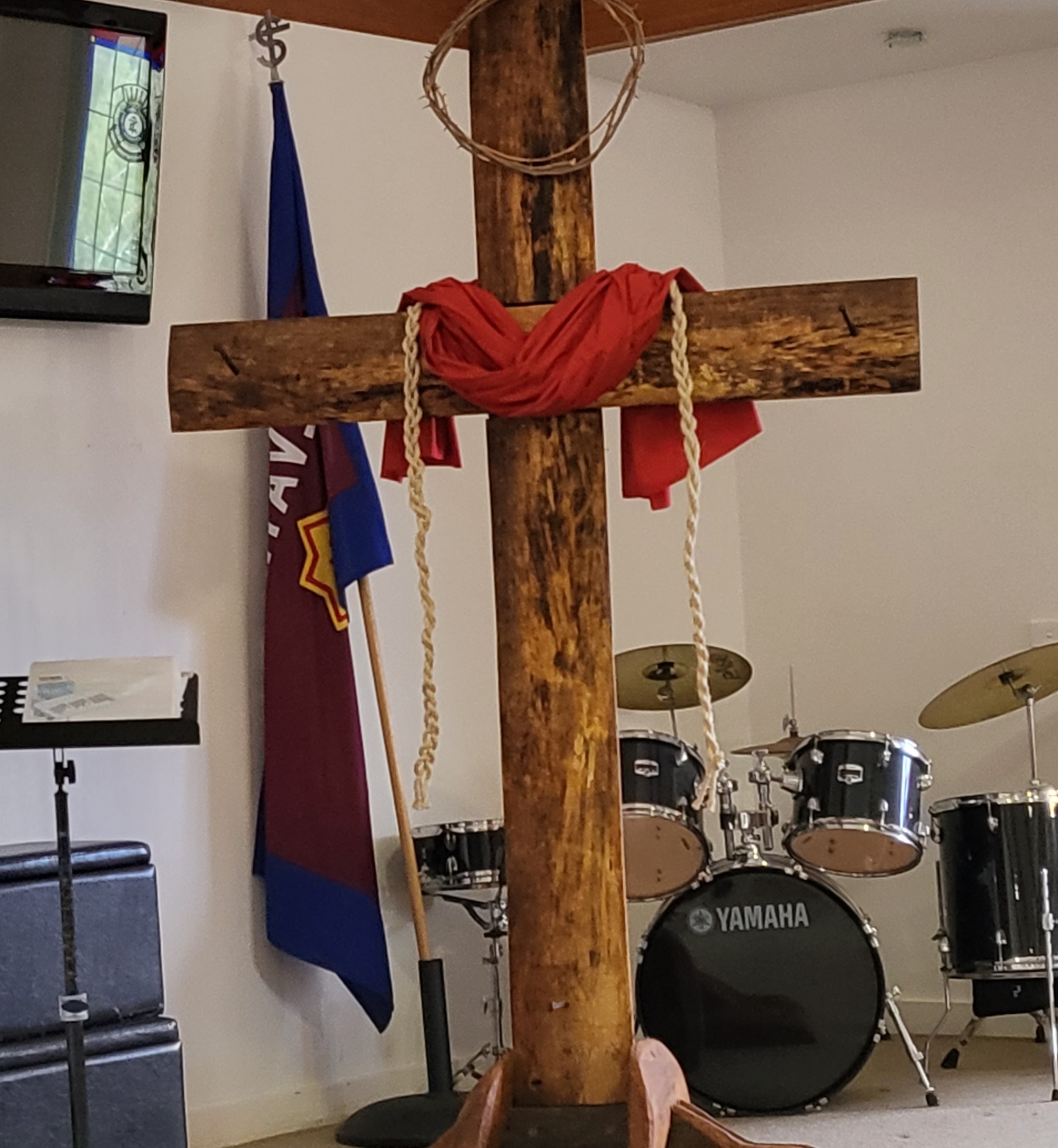
Christ is within for all to discover.

Charles Causley is a background underrated poet. Ted Hughes highly regarded him, and they were good friends. Charles Causley on Wikipedia – Charles Causley – Wikipedia

And here is another of his famous poems concerning disability.

The Liverpool Poets – Roger McGough – Comeclose and Sleepnow

At a recent U3A meeting we looked at ‘The Liverpool Poets’ who were were/are a number of influential 1960s poets from Liverpool, England, influenced by 1950s Beat poetry. They were involved in the 1960s Liverpool scene that gave rise to The Beatles.

Their work is characterised by its directness of expression, simplicity of language, suitability for live performance and concern for contemporary subjects and references. There is often humour, but the full range of human experience and emotion is addressed.

The poets that are most associated with this label are Adrian Henri, Roger McGough and Brian Patten. They were featured in a 1967 book The Liverpool Scene edited by Edward Lucie-Smith, with a blurb by Ginsberg and published by Donald Carroll.

The anthology The Mersey Sound was published by Penguin in 1967, containing the poems of Adrian Henri, Roger McGough and Brian Patten, and has remained in print ever since, selling in excess of 500,000 copies. It brought the three poets to “considerable acclaim and critical fame”, and has been widely influential. In 2002 they were given the Freedom of the City of Liverpool.

Consider the following period student piece poem by Roger McGough …

Comeclose and Sleepnow 

it is afterwards 
and you walk on tiptoe 
happy to be part 
of the darkness 
lips becoming limp 
a prelude to tiredness. 
Comeclose and Sleepnow 
for in the morning 
when a policeman 
disguised as the sun 
creeps into the room 
and your mother 
disguised as birds 
calls from the trees 
you will put on a dress of guilt
and shoes with broken high ideals 
and refusing coffee 
run 
alltheway 
home. 

Roger McGough (1937 …)

You have to look back to the sixties when the pill was in its infancy – perhaps an unfortunate choice of words and when sex before marriage was frowned on by families for many reasons. And this is a poem about loss of virginity perhaps. And it is about a female partner participating in sex written from a male perspective.

The first six lines set the scene describing the aftermath after being thrown in at the first line. And the ‘happy to be part of the darkness’ sets the mood of female guilt at what has happened.

And then the repeat of the title ‘Comeclose and Sleepnow’. This gives emphasis to the male plea to focus away from the guilt to be together and sleep. And what RM has cleverly done is to create two new joined words that emphasise the demand for being together and sleeping.

But the morning will bring the coverup. Dressed in guilt with broken high ideals.  The sun will show light on what has happened and the birds will be unheard as mother’s voice is all the focus. And refusing coffee is a such a heavy sentence and worse than roast beef in that rush home.

Consider that well known nursery rhyme.

This little piggy went to market, 
This little piggy stayed home, 
This little piggy had roast beef, 
This little piggy had none.

This little piggy went ... 
Wee, wee, wee, 
all the way home!

The modern construction of this poem would imply that it was written as a reflective piece later in life. And on a personal note, I can easily identify with the period relevant to this poem. I spent three years in the West Riding of Yorkshire in the nineteen sixties where I studied for a mathematics and statistics degree at Bradford University.

Roger McGough is a performance poet, broadcaster, children’s author and playwright. He presents the BBC Radio 4 programme Poetry Please, as well as performing his own poetry. McGough was one of the leading members of the Liverpool poets, a group of young poets influenced by Beat poetry and the popular music and culture of 1960s Liverpool. He is an honorary fellow of Liverpool John Moores University, fellow of the Royal Society of Literature and President of the Poetry Society.

Roger McGough on Wikipedia

A link to Poetry Please

The Birds – Philip Hodgins – Comments

The Birds
The time is nearly five a.m.
and all the birds are on the go.
They sound just like the frequencies
of many twiddled radios.

It's really bad the way it's gone ―
I always used to sleep okay
and dream and miss the rural life
and never see the break of day.

But since I got the only part
in cancer's scripted dialogue
I've heard those birds a million times
and seen the sun come up a lot.

I've been rehearsing death each night,
and still I haven't got it right.

Philip Hodgins (1959 – 1995)

Philip Hodgins died at such an early age after having a blood cancer. Much of his later poetry was associated with living with such a debilitating and terminal condition. And the closing couplet of this sonnet defines his despair at still being alive – ‘I’ve been rehearsing death each night’.

Clearly the bird chorus of early dawn irritates him. And who hasn’t been irritated by fiddling with the frequencies on a radio in trying to find a station? And in the second stanza it looks as though he used to sleep-in in the morning, indicating a fully engaged vibrant social nightlife.

He considers life to be a play where he has been given a nasty script. And he alone has that once only part indicating that all his contemporaries will live on as he waits for the final act.

Philip Hodgins on Wikipedia – Philip Hodgins – Wikipedia

Of interest, the legislative authority of the Australian Capital Territory is about to consider how to deal with the legality of euthanasia.

euthanasia = the painless killing of a patient suffering from an incurable and painful disease or in an irreversible coma

The Eagle – Alfred Lord Tennyson

The Eagle
He clasps the crag with crooked hands;
Close to the sun in lonely lands,
Ringed with the azure world, he stands.
The wrinkled sea beneath him crawls;
He watches from his mountain walls,
And like a thunderbolt he falls.
Alfred Lord Tennyson (1850 - 1892)

When I first started taking an interest in poetry this poem was given to me as an entry point to define poetic expression in terms of a simple text. It certainly did that and looking at it again today it still invokes admiration.

L1 … Rhyme, rhythm, and alliteration and then personification as claws are transformed into hands. We have become the eagle. Clasps give strength to the fact of maintaining a strong hold. It gives a sense of safety. The many times I go to a lookout I make sure I am safe as I look down.

L2 … Of course, the Eagle is not close to the sun. We know the sun and moon appear to be the same size though the sun is millions of miles away. But this is where the eagle lives and it is not our world, another lonely world. Hopefully, a world far away from the flight path of planes. But lonely suggests the eagle has the sky space to itself.

L3 … He is now standing rather than perched and he is ringed with the azure (bright blue cloudless sky). And we immediately have a picture of dominance against a perfect sky background. Of all birds the eagle is the lion of the sky.

L4 … You will not get a better word than wrinkled to describe the sea from a great height on a quiet day. And the fact that it crawls gives emphasis that it is below and subservient to the eagle.

L5 … This is his lookout where he spends time watching. This is his nature and way of living. So you have a still set in the mind of the reader. A waiting and that comma is so important at the end of the line. When reading it give a pause!

L6 … The thunderbolt dynamism of the last line. The contrast from being still and the crawling sea as we become the falling eagle (not diving or swooping) but falling. I am told birds do close in their feathers tight to provide greater speed in movement at the start of their dive. Therefore, falls may have a factual element as well.

Some time ago my daughter took a photograph of a sea-eagle. When she zoomed the image it had a fish in its claws. You must hand it to the eagle for such fishing skill.

Alfred Lord Tennyson on Wikipedia