Light Breaks Where No Sun Shines – Dylan Thomas – Analysis

This poem by Dylan Thomas is not easy to master and is open to personal interpretation … my thoughts are in italics after each stanza …

Light Breaks Where No Sun Shines

Light breaks where no sun shines;
Where no sea runs, the waters of the heart
Push in their tides;
And, broken ghosts with glowworms in their heads,
The things of light
File through the flesh where no flesh decks the bones.

… light only comes from darkness … light can only be recognised in terms of darkness … and the ‘heart pushes’ into new territory not like the sea which comes and goes to the same boundaries … the ‘waters of the heart’ can be equated to spiritual light … they are like ‘broken ghosts with glow-worms’ because such light is latent within the body as an abstraction … and so file through the flesh quite separate from the flesh that decks the bones …

A candle in the thighs
Warms youth and seed and burns the seeds of age;
Where no seed stirs,

A candle in the thighs has sexual connotations as well as representing time … with time the seed of youth is burnt away as a candle burns and no seed is produced

The fruit of man unwrinkles in the stars,
Bright as a fig;
Where no wax is, the candle shows its hairs.

… and with time wrinkled man unwrinkles in the stars … the ‘fruit of man’ – with light as bright as the stars … the fig an appropriate choice of fruit (it was under the fig tree that Buddha received enlightenment) .… and you could say that with time when the candle burns to the end instead of a wick we have the silver hairs of age

Dawn breaks behind the eyes;
From poles of skull and toe the windy blood
Slides like a sea;
Nor fenced, nor staked, the gushers of the sky
Spout to the rod
Divining in a smile the oil of tears.

… light and awareness in general comes from within … and dawn may break unseen (‘behind the eyes’) … ‘blood’, the waters of the heart seeks enlightenment like a spreading sea … but from the sky comes light …the divining rod searching for water spouts… and then ‘a smile’ and oil – coming as a healing to the tears of the search …the rod and oil having religious connotations

Night in the sockets rounds,
Like some pitch moon, the limit of the globes;
Day lights the bone;
Where no cold is, the skinning gales unpin
The winter’s robes;
The film of spring is hanging from the lids.

… night takes its toll … and any warmth is taken by ‘skinning gales’ … when daylight comes it meets the bone … spring will happen hopefully but it is now ‘hanging from the lids’ … this speaks to me of morning light encountering a dark depression in the body

Light breaks on secret lots,
On tips of thought where thoughts smell in the rain;
When logics die,
The secret of the soil grows through the eye,
And blood jumps in the sun;
Above the waste allotments the dawn halts.

… but light has a mystery to its work … subtle and beyond logic … ‘on tips of thought where thoughts smell in the rain’… what a marvellous line … and light comes only when attempt at logic is abandoned … the secret of light comes through the hidden soil of the eye … as a plant would grow from that that’s hidden below the ground … and when spring is here ‘blood jumps in the sun’… an awakening … but what does dawn find ‘above the waste allotments’ no recognition, no response and in such areas dawn is ineffective … perhaps a plea for a response to light

Dylan Thomas

…  I’m sure further light will come when I re-read
Closure on the life of a terrorist

Closure

don’t slam the door kid, when you leave your room
don’t slam the door tight when you enter the night
go quietly; go gently, as you enter the night
go gently as you vanish from sight

at that age when there is no age
and when the rolling of the years
matters only to another
and the inscription on the wall
is left for others to recall
and when they resurrect your name
will they relinquish certain blame?
let them shed their tears kid!

how can that have any meaning
is there meaning in a flower?
you knew exactly who you were kid!

don’t slam the door kid when you leave your room
don’t slam the door tight when you enter the night
go quietly; go gently, as you enter the night
go gently as you vanish from sight

Richard Scutter 15 October 2015

In memory of a twelve year old who reluctantly self-detonated before reaching his target in order to save the lives of others.

‘the hand that rocks the cradle rules the world’

…  children are constantly being abused and the world is in a sorry state … in the above I wanted to consider this twelve year old and his actions … with certain ‘poetic licence’ because, of course, we will never know the mind of this young boy as he failed to carry out the treacherous demands put on him.

… looking to the positive …

… he didn’t kill innocent people.

… his family gets financial support.

… there is one less to look after in his family, more food to go round the table.

… and of course he exists to a quieter, better world, his new home – depending on your point of view, and hopefully he ‘didn’t slam the door when he left his room’ … and that he took something of beauty with him from his short existence.

Marginalia – Billy Collins – Analysis

Marginalia

Sometimes the notes are ferocious,
skirmishes against the author
raging along the borders of every page
in tiny black script.
If I could just get my hands on you,
Kierkegaard, or Conor Cruise O’Brien,
they seem to say,
I would bolt the door and beat some logic into your head.

Other comments are more offhand, dismissive –
“Nonsense.” “Please!” “HA!!” –
that kind of thing.
I remember once looking up from my reading,
my thumb as a bookmark,
trying to imagine what the person must look like
why wrote “Don’t be a ninny”
alongside a paragraph in The Life of Emily Dickinson.

Students are more modest
needing to leave only their splayed footprints
along the shore of the page.
One scrawls “Metaphor” next to a stanza of Eliot’s.
Another notes the presence of “Irony”
fifty times outside the paragraphs of A Modest Proposal.

Or they are fans who cheer from the empty bleachers,
Hands cupped around their mouths.
“Absolutely,” they shout
to Duns Scotus and James Baldwin.
“Yes.” “Bull’s-eye.” My man!”
Check marks, asterisks, and exclamation points
rain down along the sidelines.

And if you have manage to graduate from college
without ever having written “Man vs. Nature”
in a margin, perhaps now
is the time to take one step forward.

We have all seized the white perimeter as our own
and reached for a pen if only to show
we did not just laze in an armchair turning pages;
we pressed a thought into the wayside,
planted an impression along the verge.

Even Irish monks in their cold scriptoria
jotted along the borders of the Gospels
brief asides about the pains of copying,
a bird signing near their window,
or the sunlight that illuminated their page-
anonymous men catching a ride into the future
on a vessel more lasting than themselves.

And you have not read Joshua Reynolds,
they say, until you have read him
enwreathed with Blake’s furious scribbling.

Yet the one I think of most often,
the one that dangles from me like a locket,
was written in the copy of Catcher in the Rye
I borrowed from the local library
one slow, hot summer.
I was just beginning high school then,
reading books on a davenport in my parents’ living room,
and I cannot tell you
how vastly my loneliness was deepened,
how poignant and amplified the world before me seemed,
when I found on one page

A few greasy looking smears
and next to them, written in soft pencil-
by a beautiful girl, I could tell,
whom I would never meet-
“Pardon the egg salad stains, but I’m in love.”

Billy Collins

I do appreciate the annotations of others … especially in poetry where interpretation is so varied. Comments can be incisive, amusing as well as informative and appreciative.

Looking at this text …

S1 … we don’t like what is being said … we hate it … we want others to know it is a load of – … so anger may generate such a response

S2 … the text is studid, silly, child like … and you have to let the author know how silly and stupid he or she is … and a dismissive derisive word only takes a second to write

S3 … well students studying text need to expand and reinfore their new found learning … so this is quite justified of course

S4 … in agreement … the empty bleachers … they want you to know they are with you all the way  … but they are quite empty of their own thinking and probably they have only given a superfical read of your precious words

S5 and S6 … BC wants you to know that you should have annotated some book at some time in your life … and if not why not? … You can’t be that lazy!

S7 … it has happened all through history … and I love the lines … anonymous men catching a ride into the future /on a vessel more lasting than themselves. … so another reason – immortality

S8 … the great merit of annotations by the famous

S9 … this annotation takes the cake and the icing even though eggs are at issue … saying something entirely outside the text and about that one subject that is so important – love! – and at the same time giving an excuse for eating and reading with messy hands! – the line that’s remembered, the line that makes the poem perfect or should I say without stain!

So keep those comments flowing … it is so easy to do in today’s internet world. Those on Facebook and other social media are doing it everyday.

So why do we write in books? – well this is what I’ve just got to tell you – it’s all about self-expression and being heard … when you were in your young wet-concrete years I’m sure you were duly tempted … well, you don’t need to find a stick …  just use those fingers! … go on, my ear is waiting!  LoL

The Moor – R. S. Thomas Analysis

The Moor

It was like a church to me.
I entered it on soft foot,
Breath held like a cap in the hand.
It was quiet.
What God there was made himself felt,
Not listened to, in clean colours
That brought a moistening of the eye,
In a movement of the wind over grass.
There were no prayers said. But stillness
Of the heart’s passions — that was praise
Enough; and the mind’s cession
Of its kingdom. I walked on,
Simple and poor, while the air crumbled
And broke on me generously as bread.

R. S. Thomas: The Moor, from Pietà, 1966

R. S. Thomas was an Anglican minister so he knew exactly what ‘traditional church’ was like but in this poem he discovers a different church while walking on his local Welsh moorland.

One enters a church with reverence taking the hat off and you expect a certain quiet – that is if there is no service in progress – so this description is an apt translation as he sets foot on the moor. And by holding his breath giving greater attention to the surrounding as he first sets foot on the moor.

But in this ‘church’ there is no listening to God via the pulpit. Here God is known as a feeling. The clean colours implying perhaps that the moor is clean and sinless – so we may assume there is no litter to corrupt the eye. If it was a windy cold day then that may have provoked a watering of the eye. On the other hand the feeling of the presence of God due to the beauty of the moor may have been so overwhelming that this caused such moisturising.

In church communication with God is by prayer – but on the moor there is direct communication between God and man via the environment.  The stillness of the heart’s passions is communication if considered as a religious response from walking on the moor in the form of a settling peace within the poet. This could then be regarded as an automatic prayer of both praise and thanks – especially by R. S. Thomas being tuned to religious thought.

The mind’s cession of its kingdom gives an emphasis to the exhilaration in this moment such that the mind is expanded in wonderment in trying to give comprehension. But then the move as he walks on – the breaking away from this intense communion – clearly likened to a church communion where there is the breaking of bread.

I think in today’s twenty four by seven world we all need to find time to escape into a place of solitude – to find our own moor and perhaps in the still and beauty of a such a sacred place experience the presence of God and a settling within. If my bible memory is correct JC had to do likewise when he was overwhelmed by the masses that pressed in on him.

R. S. Thomas on Wikipedia.

Here are some wonderful images of the Welsh Moor on Tom Clark’s Blog.

Fruhlingsglaube – Johann Ludwig Uhland and Schubert

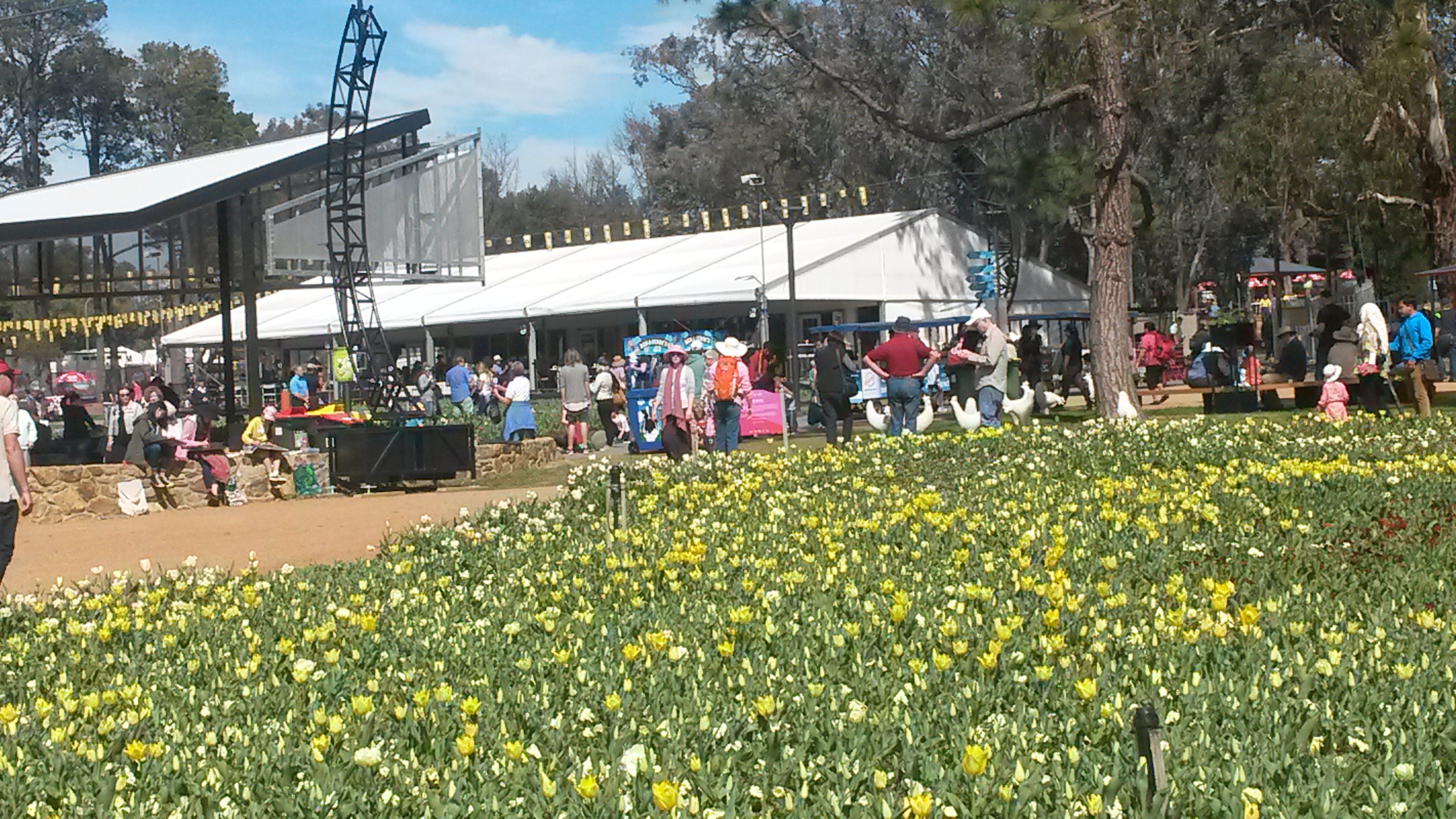
Floriade15Floriade – Spring Flower Festival in Commonwealth Gardens Canberra

It is Spring in Australia and here is a German poem by the romantic lyric poet Johann Ludwig Uhland (1787-1862).

Fruhlingsglaube

Die linden Lüfte sind erwacht,
Sie säuseln und wehen Tag und Nacht,
Sie schaffen an allen Enden.
O frischer Duft, o neuer Klang!
Nun, armes Herze, sei nicht bang!
Nun muß sich alles, alles wenden.

Die Welt wird schöner mit jedem Tag,
Man weiß nicht, was noch werden mag,
Das Blühen will nicht enden;
Es blüht das fernste, tiefste Tal:
Nun, armes Herz, vergiß der Qual!
Nun muß sich alles, alles wenden.

Below are two translations from the internet …

Spring’s Faith (re: this Blogspot post)

The mild breezes are awakened,
They whisper and move day and night,
And are at work everywhere.
O fresh scent, o new sound!
Now, poor heart, don’t be afraid.
Now all, all must change.

The world is more beautiful with every day,
One knows not what yet may be,
The flowering will not end.
Even the deepest, most distant valley blooms.
Now, poor heart, forget your torment.
Now all, all must change.

Faith in Spring (Re -Poemhunter)

The gentle winds are awakened,
They murmur and waft day and night,
They create in every corner.
Oh fresh scent, oh new sound!
Now, poor dear, fear not!
Now everything, everything must change.
The world becomes more beautiful with each day,
One does not know what may yet happen,
The blooming doesn’t want to end.
The farthest, deepest valley blooms:
Now, poor dear, forget the pain!
Now everything, everything must change.

This highlights the problems with translations. It is a often a matter of personal taste for some words may be more fitting to the theme than others. It is up to the reader to choose. It may be a case of taking a combination from various translations to fit your preference. For example the first three lines could be as follows …

The gentle winds awake – (I prefer gentle to mild)
They murmur and waft day and night
And are at work every where

However of more importance, this poem inspired Franz Schubert‘s, (1797-1828) to compose a lieder and this is a link to a Youtube video of Dietrich Fischer-Dieskau singing Fruhlingsglaube  … and here is the text from this song …

the gentle breezes have awakened,
they whisper and float day and night,
they create on all sides.
On all sides.
O fresh fragrance, O new sound!
O new sound!
Now, poor heart, be not afraid!
Now all, all must change.

The world becomes more beautiful with every day,
No one knows what may become,
The blossoming will not end;
It will not end;
It blooms in the farthest, deepest valley:
It blooms in the deepest valley:
Now, poor heart, forget thy pain!
Now all, all must change.

… so again the original poem is transformed and in this case married into a new art-form while still retaining the essence of the text and if you have watched and listened to the Youtube video you will see that ‘Spring images’ also accompany both the audio and the words.

Clearly if it hadn’t been for Schubert this poem would not have reached such prominence in the public ear.

Considering the line … The world becomes more beautiful with every day … I immediately thought of Gerard Manley Hopkins and … The world is charged with the grandeur of God from ‘God’s Grandeur’ – whether or not we are able to see beauty in each day is another matter!

Cats – Arthur Tessimond – Comments

Cats

Cats no less liquid than their shadows
Offer no angles to the wind.
They slip, diminished, neat through loopholes
Less than themselves; will not be pinned

To rules or routes for journeys; counter
Attack with non-resistance; twist
Enticing through the curving fingers
And leave an angered empty fist.

They wait obsequious as darkness
Quick to retire, quick to return;
Admit no aim or ethics; flatter
With reservations; will not learn

To answer to their names; are seldom
Truly owned till shot or skinned.
Cats no less liquid than their shadows
Offer no angles to the wind.

Arthur Tessimond

This poem was sent to me by a friend. Looking at the first two lines (and the last two lines) …

Cats no less liquid than their shadows
Offer no angles to the wind.

An interesting way in describing the very nature of the cat as a cat is very much ‘disappearing liquid’ in its movements and you will never find a cat left open to any wayward wind.

This poem must be read to appreciate the soft sibilant sounds so suggestive of the stealth movement of the cat. Words like less, liquid, slip, loopholes involve holding the tongue at the back of the top front teeth. And I’m sure that they do squeeze through spaces much smaller that their bodies. They are known to be very independent and do their own thing without regard for their owner – though I can’t speak first hand on this matter as I have never owned a cat. To what extent they avoid rather than engage I guess dependents on whether they can find appropriate escape when confronted.

To wait obsequious as darkness gives a certain oxymoronic flavour to the likes of hidden attendance in disappearing and reappearing according to disposition. It looks likes training the cat is a difficult proposition – all I can say is perhaps Arthur Tessimond has had firsthand experience with a difficult creature.

An abrupt harsh ending in definition – a cat can only be known when shot or skinned.

The second and fourth lines in each stanza have end-word rhyme. Enjambment at the end of the first and third stanzas follows the liquid flow of the cat text.

Here is a link to Arthur Seymour John Tessimond on Wikipedia.

Beach Burial – Kenneth Slessor – Analysis

SeaGrave

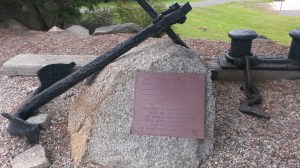
This memorial is dedicated to the men and women lost at sea from merchant vessels in war and peace. The photo was taken in the grounds of the National ANZAC Centre. Albany Western Australia. It was from Albany that the first fleet of vessels left carrying Australian and New Zealand troops for WWI battlefields, leaving on the first of November 1914. A second fleet of vessels left in December of that year. (ANZAC = Australian and New Zealand Army Corps).

Beach Burial

Softly and humbly to the Gulf of Arabs
The convoys of dead sailors come;
At night they sway and wander in the waters far under,
But morning rolls them in the foam.

Between the sob and clubbing of gunfire
Someone, it seems, has time for this,
To pluck them from the shallows and bury them in burrows
And tread the sand upon their nakedness;

And each cross, the driven stake of tidewood,
Bears the last signature of men,
Written with such perplexity, with such bewildered pity,
The words choke as they begin –

“Unknown seaman” – the ghostly pencil
Wavers and fades, the purple drips,
The breath of wet season has washed their inscriptions
As blue as drowned men’s lips,

Dead seamen, gone in search of the same landfall,
Whether as enemies they fought,
Or fought with us, or neither; the sand joins them together,
Enlisted on the other front.

El Alamein

Kenneth Slessor

I think this is one of the most moving and well-constructed of all Australian war poems. Look at the construction of the third line in each stanza. For example … At night they sway and wander in the waters far under – ^ ^ ^ ^ ^ ^^ ^ ^ ^^ ^ ^^ thirteen syllables, a long line reflecting the action of the drifting dead over time, internal rhyme and alliteration with a bobbing rhythm.

Apart from a quiet, muted, sad voice in the choice of apt but simple words one thing that gives added poignancy is the fact that it is an after the event poem … the outcome of war set against the background of the action … a reversal of the theatre … and easily visualised by beach oriented Australians. And in the end, despite the many differences, the coming together of humanity entering the afterlife as one.

Isn’t it sad too that they were lost in the waves and then after burial their inscriptions are lost too by the rain.

In a lecture to students Kenneth Slessor did explain his intent by the last words of the last line … the other front. I have no record of this but my interpretation is that all humanity may be regarded as enlisted by the creator. In other words created for a common purpose involving action. The nature of the other front is up to debate but my take involves the path to eternity.

Footnote …

Here is a link to Kenneth Slessor on Wikipedia.

Some have labelled his work lacking … Judith Wright for instance uses the terms “skeletal” and “lacking in content” (from Preoccupations in Australian Poetry 1965). I do not find him so … maybe there is confusion between poetry and philosophy.

We should not let the philosophy of a person colour the way we view the work … I find his Five Bells poem for instant over-flowing in a desire to find out a reason behind life and in this way full of content. Apparently he wrote some light verse which I have not seen … in contrast to the well-known Five Bells and Beach Burial.

Note – El Alamein was really the turning point in the second World War. It was the first major battle that the Allies won. Although the battle was fought on the sands of Egypt there were plenty of losses at sea. Rommel was desperate for supplies of oil and ammunition and two crucial relief merchant ships were sunk at the time of the battle in October 1942.

The Clear Air of October – Robert Bly – Analysis

A different poem for a contrast … a bit like an abstract compared to a landscape painting …

The Clear Air of October

I can see outside the gold wings without birds
flying around, and the wells of cold water
without water standing eighty feet up in the air,
I can feel the crickets’ singing carrying them into the sky.

I know these cold shadows are falling for hundreds of miles,
crossing lawns in tiny towns, and doors of Catholic churches;
I know the horse of darkness is riding fast to the east,
carrying a thin man with no coat.

and I know the sun is sinking down great stairs,
like an executioner with a great blade walking into a cellar,
and the gold animals, the lions, and the zebras, and the pheasants,
are waiting at the head of the stairs with robbers’ eyes.

Robert Bly (1926 –

A modern contemporary American poet with a liking for Minnesota and according to The Norton Anthology …

… his poetry can be thought of as mystical imagery and …

… Bly’s favourite source is the German mystic Jakob Boehme. The epigraph from Boehme at beginning of Bly’s second book … The Light around the Body … declares “for according to the outward man, we are in this world, and according to the inward man, we are in this world … since then we are generated out of both worlds, we speak in two languages, and we must be understood also by two languages.”

Perhaps he is using a second language in the above poem?

How does the title relate to the images created by the words?

Why do the animals have robbers’ eyes?

I think an answer to the last question provides the key to unlocking meaning behind the poem.

Footnote
Here is a link with more information on Robert Bly from Wikipedia