A Dog Has Died – Pablo Neruda

A Dog Has Died

My dog has died.
I buried him in the garden
next to a rusted old machine.
Some day I'll join him right there,
but now he's gone with his shaggy coat,
his bad manners and his cold nose,
and I, the materialist, who never believed
in any promised heaven in the sky
for any human being,
I believe in a heaven I'll never enter.
Yes, I believe in a heaven for all dogdom
where my dog waits for my arrival
waving his fan-like tail in friendship.
Ai, I'll not speak of sadness here on earth,
of having lost a companion
who was never servile.
His friendship for me, like that of a porcupine
withholding its authority,
was the friendship of a star, aloof,
with no more intimacy than was called for,
with no exaggerations:
he never climbed all over my clothes
filling me full of his hair or his mange,
he never rubbed up against my knee
like other dogs obsessed with sex.
No, my dog used to gaze at me,
paying me the attention I need,
the attention required
to make a vain person like me understand
that, being a dog, he was wasting time,
but, with those eyes so much purer than mine,
he'd keep on gazing at me
with a look that reserved for me alone
all his sweet and shaggy life,
always near me, never troubling me,
and asking nothing.
Ai, how many times have I envied his tail
as we walked together on the shores of the sea
in the lonely winter of Isla Negra
where the wintering birds filled the sky
and my hairy dog was jumping about
full of the voltage of the sea's movement:
my wandering dog, sniffing away
with his golden tail held high,
face to face with the ocean's spray.
Joyful, joyful, joyful,
as only dogs know how to be happy
with only the autonomy
of their shameless spirit.
There are no good-byes for my dog who has died,
and we don't now and never did lie to each other.

So now he's gone and I buried him,
and that's all there is to it.

Pablo Neruda (1904 - 1973)

This is Neruda’s pet dog and the first thing to notice is that there is no naming of the dog other than dog.
The emphasis is on the fact that he is Dog.

S1 … A straightforward statement that the dog has died and been buried.

S2 … Neruda will have similar fate. He reflects on the attributes that are commonly associated with a dog. Looking at the negative side of dog. Although Neruda has no believe in heaven his dog will be there and waiting for him in Dog Heaven.

S3 … his dog was not a close dog … rather distant like a star … there was no intimacy of touch that is common with a dog as pet

S4 … it looks as though the Dog gazes at the pathetic creature that is Neruda … he is there out of duty but what a waste of dog time … never troubles his owner

S5 … and when Neruda takes dog for a walk along the coast at Isla Negro (at the cottage in Chile where Neruda lived), Neruda is jealous at the natural happy full of life spirit that Dog shows on the walk … and I love the line full of the voltage of the sea’s movement … perhaps Neruda, in contrast is depressed, the poem was written near the end of his life.

S6 … no goodbyes necessary, a honest relationship

S7 … In line with the first stanza the Dog is buried and gone and that’s the end. As though a full stop on grief. I think he loved his dog very much despite wallowing in self-pity and using such a degrading tone.

This is certainly a different poem than one usually associates with Neruda. Most people would associate Neruda with his famous love sonnets.

Prayer – Carol Ann Duffy

Prayer

Some days, although we cannot pray, a prayer
utters itself. So, a woman will lift
her head from the sieve of her hands and stare
at the minims sung by a tree, a sudden gift.

Some nights, although we are faithless, the truth
enters our hearts, that small familiar pain;
then a man will stand stock-still, hearing his youth
in the distant Latin chanting of a train.

Pray for us now. Grade 1 piano scales
console the lodger looking out across
a Midlands town. Then dusk, and someone calls
a child's name as though they named their loss.

Darkness outside. Inside, the radio's prayer —
Rockall. Malin. Dogger. Finisterre.
Carol Ann Duffy (1955 -

S1 …
Sometimes quite unexpected we are caught with a sudden beautiful impulse from nature and we are completely overwhelmed and stop what we are doing in appreciation. The woman is unaware who is giving her this song. She uses her hands as she looks up into the tree, so maybe needing protection from the sun. The tree or the birds in the tree have arrested her attention.

S2 …
The rolling motion of a train is likened to chanting as it moves along the track in the distance. It looks like this is happening as the man reflects on something from his youth. And he is now confronting the truth of what happened. It appears heart wrenching and painful to recall. A train may be involved. It has arrested his attention and like the first stanza it could be likened to a prayer.

S3 …
The lodger is in his room while a child in the house is playing the piano. It is dusk a fitting time for grief as the lodger looks out of his window and reflects on a loss maybe a child in his family who played when he was a parent. The calling of the name  and the recalling of a name in the experience of grief perhaps.

S4 …
The mentioning of the fishing forecast reminds me of my youth when this was familiar when listening to the radio. And prayers abound from the many that are listening and thinking of those out at sea. Prayers emanating from inside the warm of homes to the dark foreboding ships at sea.

All these gifts from everyday life are likened to prayer.

Providence springs to mind, if one believes in a spiritual force taking care of us on an individual basis. A very comforting thought when we are depressed and nobody seems to care for us.

A detailed analysis is on this Site – “Prayer,” by Carol Ann Duffy (saltproject.org)   The following notes are taken from this link …

1 … Minims  are half-notes written on a page of musical notation.

2 … And BBC Radio has long broadcast the “Shipping Forecast” for the various seas around the British Isles, waters divided into 31 sea areas, including Rockall, Malin, Dogger, and Finisterre. These regular broadcasts, especially the ones late at night, are for many Britons a deeply familiar touchstone: the announcer’s voice methodically reciting the sea areas all around the islands, one by one, forecasting the weather.

3 … “Finisterre” (pronounced “FIN-iss-tair,” rhymes with “BIN-kiss-fair”) literally means “end of the world”; the sea area’s name was recently changed to “FitztRoy,” but many Britons (such as the poet Duffy herself) grew up hearing the older name “Finisterre” repeatedly intoned on BBC Radio…

Cape Finisterre is a rock-bound peninsula on the west coast of GaliciaSpain.
In Roman times it was believed to be the end of the known world. The name Finisterre, like that of Finistère in France, derives from the Latin finis terrae, meaning “end of the earth”.

Love Dogs – Rumi

Love Dogs

One night a man was crying,
“Allah, Allah!”
His lips grew sweet with the praising,
until a cynic said,
“So! I have heard you
calling out, but have you ever
gotten any response?”
The man had no answer for that.
He quit praying and fell into a confused sleep.
He dreamed he saw Khidr, the guide of souls,
in a thick, green foliage,
“Why did you stop praising?”
“Because I’ve never heard anything back.”
“This longing you express
is the return message.”
The grief you cry out from
draws you toward union.
Your pure sadness that wants help
is the secret cup.
Listen to the moan of a dog for its master.
That whining is the connection.
There are love dogs no one knows the names of.
Give your life to be one of them.

Rumi (30 September 1207 – 17 December 1273)

He stopped praying because he never heard anything back. He states that he has never had a response in his life. I wonder why he is praising God at the start of the poem. If in fact he is giving thanks to God then he has at one time received a response. I personally think prayer should always start with a thank you rather than an ask.

This Rumi poem poses numerous personal questions … Does God respond to prayer? Could it be that the longing itself is the connection – the more the longing the more the connection like a dog in grief? What is God’s response to personal prayer? Is our prayer based on selfish desire – what we want. Is a non-response an appropriate response? How does providence provide an answer to prayer? And is God’s response internally within us all the time – the God within?

From Wikipedia … Rumi was a 13th-century Persian poet, Hanafi faqih (jurist), 
Islamic scholarMaturidi theologian (mutakallim), and Sufi mystic originally from Greater Khorasan in Greater Iran.

Poppies in October – Sylvia Plath and AI

Poppies in October
Even the sun-clouds this morning cannot manage such skirts.
Nor the woman in the ambulance
Whose red heart blooms through her coat so astoundingly –

A gift, a love gift
Utterly unasked for
By a sky

Palely and flamily
Igniting its carbon monoxides, by eyes
Dulled to a halt under bowlers.
Oh my God, what am I
That these late mouths should cry open
In a forest of frosts, in a dawn of cornflowers.
Sylvia Plath (27 October 1962)

Analysis …

Nothing in sun and sky can match the poppy skirts (petals) in their colour … nor the woman (reference to herself) in the ambulance whose red heart is amazingly kept alive … the woman (SP) close to death … others not so lucky … she has been rescued and will survive.

This late showing is out of context with the season … and is a gift unasked for …and in this regard, SP could be talking about her astoundingly good luck in surviving her earlier suicide attempt … her red heart did bloom … how come she was saved? … how come she was given a second chance? … SP did not ask for this … to be re-born … at least she acknowledges this gift as a ‘love-gift’ … even if she is not thankful.

… the medicos that saved her did not know her … see her red passion, her emotional state … how could they … they wear bowler hats … head-centric on their work

… and then the lament of not knowing who she is … the poppy in October … out of context … but still alive … she cries aloud for some understanding … why should she be alive in a ‘forest of frosts’ (in a deep tangle where growth is unlikely – how she saw her life) and in a ‘dawn of cornflowers’ (emerging against the bland mass of the common … a little arogance perhaps)

Note … this poem was written on SP’s last birthday (27 Oct 1962) … her 30th birthday … at a time when she was living by herself (with the two children) in London – separated from Ted Hughes  … she also wrote another poem ‘Ariel’ on the same day … so she had time to herself on this day to devote to poetry … and to question her existence … to question why she has survived out of season (like the poppy) … and to ask why she is still alive … and inferred – why is live so hard … it is a cry for an explanation from the deep intensity of her being for a meaning in her troubled world … questioned in a state of mental unrest.

… and whether any physical poppies were around on this her birthday is open to question … they could be mind-poppies … (refer also to a previous poem ‘Poppies in July’ written in Devon in the summer … when times were different.)

And this is what AI (CHATgpt) had to say about this poem illustrating the dangers of using AI without careful attention to the response …

“Poppies in October” is one of Sylvia Plath’s poignant poems, reflecting her complex relationship with nature, life, and death. In this poem, she explores themes of beauty, transience, and the inevitable decay that accompanies life.

The imagery of poppies, often associated with remembrance and sleep, takes on multiple layers of meaning in Plath’s hands. They are portrayed as fragile and ephemeral, yet their vibrant red hue contrasts sharply with the barrenness of autumn, suggesting a defiance against mortality.

Plath’s use of language is characteristic of her poetic style—rich in symbolism and laden with emotion. The juxtaposition of “scarecrow” and “blood-burned barns” evokes a sense of desolation and decay, while the “golden mummies” suggest a haunting beauty amidst the inevitable march of time.

The poem’s closing lines, “Now she is flying / More terrible than she ever was, red / Scar in the sky, red / Comet / Over the engine that killed her— / The mausoleum, the wax house,” hint at the speaker’s acceptance of death as a transformative force. The image of the poppy as a “red / Scar in the sky” suggests a lingering presence even in death, a reminder of the fragility and resilience of life.

Overall, “Poppies in October” is a powerful meditation on mortality, capturing both the beauty and sorrow inherent in the cycle of life and death. Plath’s adept use of imagery and language imbues the poem with a haunting quality that lingers in the mind of the reader long after the final lines have been read.

Quite clearly the text that I have highlighted in red above refers to the different SP poem Stings.

Here is the last stanza of Stings ...

Now she is flying
More terrible than she ever was, red
Scar in the sky, red comet
Over the engine that killed her ----
The mausoleum, the wax house.

It is interesting that AI picked up these lines. The red scar in the sky could have association with a poppy. And after her suicide attempt in the cellar she had a scar on her face enhancing personification. Stings was written in early October 1962. That month SP was really flying in terms of her poetic creativity.

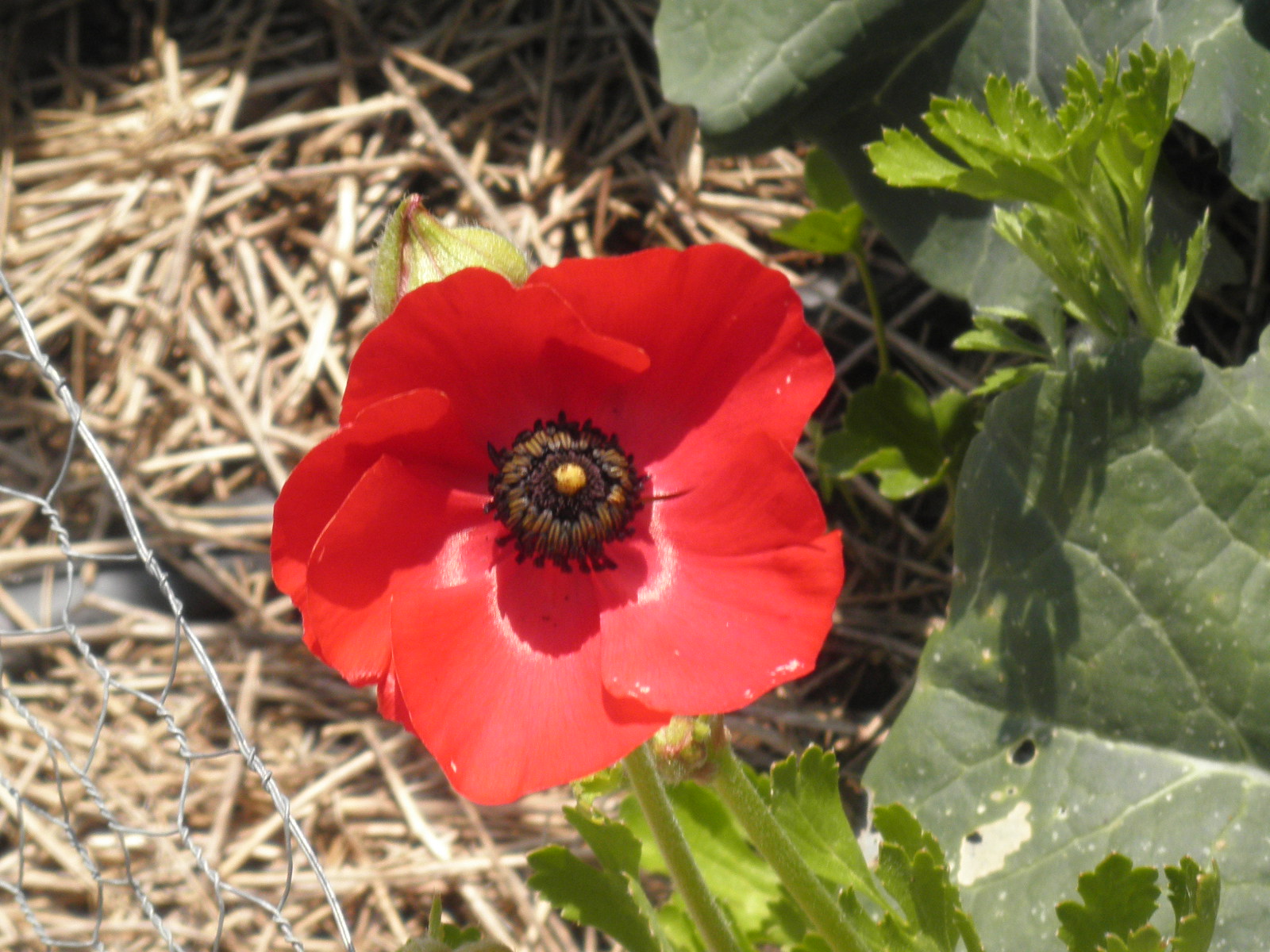
… and here is a poppy from the Australian spring a poppy very much in season.


Along by merry Christmas time – Henry Lawson – Comments

Along by merry Christmas time

Along by merry Christmas time they buy the aged goose,
And boil the dread plum pudding, because of ancient use.
But to sneer at old time customs would be nothing but a crime,|
For the memory of the Past is all bound up in Christmas time.

Then Jim comes home from shearing, and he puts a few away,
With Dad, perhaps, or Uncle, but they’re right on Christmas Day:
For be it on the Never, or ‘neath the church bells’ chime,
The family gets together, if they can, at Christmas time.

And, after tea at Christmas, they clear the things away
And play the dear old silly games our grand-folk used to play
And Dad gives a recitation that used to be the joy
Of all the Western countryside, when Father was a boy.

Along by merry Christmas time, and ere the week is o’er
We meet and fix up quarrels that each was sorry for.
Our hearts are filled with kindness and forgiveness sublime,
For no one knows where one may be next merry Christmas time.

Henry Lawson (1867 – 1922)


S1 – Christmas is all about remembering the past. The birth of Christ and friends and family that are, or have been, dear to us.

At Christmas we reflect on people that are not with us … always hard to come to terms with loss of the precious in our life. But can love deal with the loss of a recent family member. Here is a poignant poem by Louisa Lawson, the mother of Henry Lawson – A Mother’s Answer – Louisa Lawson | my word in your ear

Henry Lawson’s easy flowing rhymed poem was written in 1913, maybe the plum pudding was not what it is today. An aged goose doesn’t sound attractive either. How many people in Australia are planning to eat goose this year, not exactly a first choice! In fact a meat I have never eaten.

S2 – Christmas is all about bringing family and friends together. And regardless of where the family gather – the Never, Never – the outback, or whether the family congregates at Church together. Food and drink are always to the fore. The variety of food and drink on offer has expanded considerably since I was a boy. And many items that were a luxury for us at Christmas are now commonplace throughout the year.

S3 – Christmas is all about sharing family play. And being accepting of the previous generation in the games they used to play. There are always well-known familiar stories associated with relatives in conjunction with the play. And listening without comment maybe hard for the younger generation, however boring! And when I was growing up music renditions by those who could play, piano and violin from my mother and an uncle come to mind.

S4 – Christmas is all about forgetting squabbles and forgiving. And the last line tells us unequivocally to make the best of the time together; for who knows where family and friends will be next Christmas.

Henry Lawson is best known for being a master of the short story – ‘While the Billy Boils’ – rather than his poetry. Although an Australian theme the Christmas expression in this poem has wide universal association in the Western World.


So what can I say – make the most of this coming Christmas Day.

Henry Lawson on Wikipedia

My Papa’s Waltz – Theodore Roethke – Comments

My Papa’s Waltz

The whiskey on your breath
Could make a small boy dizzy;
But I hung on like death:
Such waltzing was not easy.

We romped until the pans
Slid from the kitchen shelf;
My mother’s countenance
Could not unfrown itself.

The hand that held my wrist
Was battered on one knuckle;
At every step you missed
My right ear scraped a buckle.

You beat time on my head   
With a palm caked hard by dirt,  
Then waltzed me off to bed  
Still clinging to your shirt.

Theodore Roethke (1908 – 1963)

An episode between father and son when Theodore was a child. And you can always value the words from a poet when involving family in their work. Clearly his father was an alcoholic and his mother not improving on his resultant behavior and the impact on her kitchen domain. But the above words give only a limited insight into his character. And interesting Theodore Roethke said this about his father – ‘a great story could be written about my father, for in many ways he was truly a great man. I have never found anyone remotely like him in life or literature’.

I remember the words my father used to say – if you can’t be good be careful. I used to like these words because it gave acceptance to my non good behavior. There is another interpretation in that careful is care full and of course I try to be full of care as I react with people and life. Independent of the fact I don’t want to be had up for speeding. I am actually very good when driving especially if I have my partner at my side.

The father-son relationship is the foundation in the growth of any boy. The effect on the future life of the son is another matter. The new generation is always in conflict in some way with the old. I remember a Cat Stevenssong in relation to the differences in thought for those that can remember Cat Stevens.

There are plenty of poems in similar vein where the father-son relationship is articulated. Seamus Heaney has poems in relation to both his father and mother.

From a poetry point of perspective a lot of thought has gone into this simple story poem. The end rhyme words in the second and final lines of each stanza are well chosen. And there is a subtle stumbling effect in the sound of dizzy and easy as the small boy is twirled around in the first stanza.

Here is a link to a very personal poem from Seamus Heaney in relation to his mother.

Theodore Roethke on Wikipedia

In the Park – Gwen Harwood – Analysis

In the Park

She sits in the park. Her clothes are out of date.
Two children whine and bicker, tug her skirt.
A third draws aimless patterns in the dirt.
Someone she loved once passes by –– too late

to feign indifference to the casual nod.
“How nice,” et cetera. “Time holds great surprises.”
From his neat head unquestionably rises
a small balloon … ”but for the grace of God.…”

They stand awhile in flickering light, rehearsing
the children’s names and birthdays. “It’s so sweet
to hear the chatter, watch them grow and thrive,”
she says to his departing smile. Then nursing
the youngest child, sits staring at her feet.
To the wind she says, “They are eating me alive.”

Gwen Harwood (1920 – 1995)
From Poems 1963

Gwen Harwood was an Australian poet and librettist, creating text for musical score. Harwood is regarded as one of Australia’s finest poets. And the above is a poem she is often identified with concerning motherhood.

The title In the Park brings immediate association to any park experience in the mind of the reader with the suggestion that something is going to happen.

S1 … The first three lines define the situation. A bedraggled poorly dressed mother coping with three young children two of which are pulling at her dated skirt. And I guess many seeking peace and quiet from the park would hurry their step as they walked by. But the next line is the key to the occurrence in the park. Someone she once knew under completely different circumstances confronts her painful situation. And this someone is a special person from the past, a lover. And I think many would assume a man but equally it could have been a girlfriend. But she is caught by surprise and can’t feign indifference to the previous relationship. And the break is appropriate as we flow into the section stanza.

S2 … And this lover from the past shows politeness and he says it all ‘Time holds great surprises’.  And there is immense relief that he had avoided being associated with such a life – ‘but for the grace of God‘. He recovers from such emotional thought himself to spend time in conversation pleasantries that flow into the third stanza.

S3 … He takes an interest in the children, their names, and birthdays. The mother then completely denies her situation and contradicts her dire adjustment to motherhood saying a little sarcastically ‘It’s so sweet to hear the chatter, watch them grow and thrive’ as the fellow departs. Contradicting the glory of motherhood and the expectation once held by her and the expectation of society at that time in the role of the mother in family life.

What is interesting is that later in life she penned a different text to give a balance.

A later text …

She sits in the park, wishing she’d ever written
about that dowdy housewife and her brood.
Better, The Memoirs of a Mad Sex Kitten,
or a high-minded Ode to Motherhood
in common metre with a grand doxology.
“They have eaten me alive.” Did she write that?
The sonnet nestles in a new anthology
safe in its basket as a favoured cat.

She sits a while in flickering light rehearsing
the family’s birthdays. “Stop, you bloody fool!”
A young house-father with a pram is cursing
a child whose pushed another in the pool.
She helps him calm them. “Eating you alive?
Look at me. I’ve lived through it. You’ll survive.”

Written in 1992
from The Present Tense (1995)

Two wonderful Petrarchan Sonnets. I think the first eight lines in the above, before the twist have a subtle swipe at the establishment of the day at the time she wrote ‘In the Park’. That sonnet is now safe and valued, perhaps much more than at the time it was written.

The male role in supporting children in family upbringing has changed markedly over the years eating away at the traditional stereotype of motherhood.

Gwen Harwood on Wikipedia – Gwen Harwood – Wikipedia

Bobowler – Liz Berry – Comments

Bobowler
Darkling herald, 
see her flower-face on a waning moon
and spake her name aloud
to conjure the voice 
of one you loved and let slip
through the wing gauze of jeth. 

In the owl-light,
when loneliness shines
through your bones like a bare bulb,
she'll come for you,
little psyche bringing missives
from the murmuring dark. 

She comes to all the night birds:
cuckoos, thieves, the old uns
and the babies in their dimlit wums, 
the boy riding his bike 
up Beacon Hill, heart thundering 
like a strange summer storm. 

And the messages she carries 
in her slow soft flight? 
Too tender to speak of, too heartsore, 
but this: I am waiting. 
The love that lit the darkness between us 
has not been lost. 
Liz Berry (1980 –
from her book 'The Republic of Motherhood'.

Liz Berry is a Black Country poet in that she lives and writes poetry in connection with that area known as the Black Country in England an area in the midlands near Birmingham and her book entitled the same includes the use of the local dialect and it won the Forward Prize for the Best First Collection in 2014.

She very kindly sent a reading of the above poem for our U3A Poetry Appreciation Group in Canberra last week. It was wonderful to hear her, and I was totally mesmerized by the touch of humour that pervaded her presentation along with the pronunciation of the local vernacular.

Bobowler = a large moth in the local language
Jeth = deth
Cuckoos = lovers
dimlit wums = homes

Here are my comments …

S1 – quite a pretty moth and shaped in conjunction with the moon appropriately associated with the night as it seeks light … darkling is a not a common usage word and what came to mind was darkling in connection with Thomas Hardy and The Darkling Thrush … but the moth is a herald to the memory of someone loved who let slip through the wing gauze of deathwing in relation to the moth and the flight from life … but the voice of the departed can be conjured into life … indicating a touch of magic in the recreation in her mind … something very special in the relationship.

S2 – Interesting that owl is integrated in the Bobowler title. I do like the way this second stanza expresses how loneliness and loss is subjugated through bones like a bare bulb and bringing missives; messages out of the murmuring night. Missives is an interesting word having a contractual flavour. The subtle shadow communication of the person loved is likened to the flutter of a moth against the light of the bulb. The analogy with the seeking of light.

S3 – A wider generic communication perhaps … she comes to all … of those much loved that have departed … bringing messages … whether to lovers, the aged, babies in their homes (dimlit wums) … or something very specific as a boy struggling on a bike up Beacon Hill … the departed are continually fluttering into our lives to live again so to speak … linked in the mind

S4 – The messages are back to the personal … tender and likened to the slow soft flight of the moth. Love is rekindled and never lost. The love that lit the darkness between us may imply more than just the separation by death.

An example of how something simple in nature like a moth flitting against a light bulb can be used for poetic expression. And how seeking light can be transferred into seeking connection with the dead. And the use of the old dialect may help the recall.

Liz Berry on Wikipedia