The Silken Tent – Robert Frost

THE SILKEN TENT

She is as in a field a silken tent
At midday when a sunny summer breeze
Has dried the dew and all the ropes relent,
So that in guys it gently sways at ease,
And its supporting central cedar pole,
That is its pinnacle to heavenward
And signifies the sureness of the soul,
Seems to owe nought to any single cord,
But strictly held by none is loosely bound
By countless silken ties of love and thought
To everything on earth the compass round,
And only by one’s going slightly taut
In the capriciousness of summer air
Is of the slightest bondage made aware.

Robert Frost (1874 – 1963)

Here is a fine example of the English sonnet by Robert Frost that takes my fancy. Iambic Pentameter with structure abab cdcd efef for the three quatrains and then the rhyming summary couplet

The opening line although a little cumbersome is perhaps ‘as good as’ … she walks in beauty like the night (Byron)

Interesting word used ‘guys‘ a double take in today’s usage that happens to fit the theme of the sonnet.

… what a wonderful way to walk the world … being special, gentle, at ease with life, and bonded to all in a loose sort of way in love and thought connected … by countless silken ties of love and thought

… and of more importance tied by a strong spiritual sense … not dependent on any one alone but everyone giving something to hold her in place to a heavenly position (to the central cedar pole) … and this heavenly connection making her effective in coverage … making the person effective in life as well as making the tent usable … imagine a sagging tent without an upright central pole

… I really like the suggested ambience in the closing couplet … and the word capricious = fanciful, unpredictable … quite fitting … moving freely in the lightness of a summer breeze – and only by going slightly taught does she (or indeed we) become aware of that heavenly connection that binds – always subtle, always latent

Here is a link to Robert Frost on Wikipedia

Bimbo – Bruce Dawe

Bimbo

The house and garden are in joint
ambush to jolt us into remembering
the lawns where you rolled whenever we returned,
the scratched back door when it was thundering,
the spot by the fowl-house where you sat,
pricked-ears, for hours, listening to the chickens,
the raised flooring where you slept every night
– all around us now the plot thickens,
the lines of your life run deep: the book closed,
you run on in our own mortal quest
and where we had thought the story ended
we can see now you will not let us rest
but compel us to attend you just the same,
lamenting the bones buried deep
under the latest seed-beds and defying
your present muddy-nosed long sleep,
rousing yourself at the needle’s first touch,
shrewd, beautiful as always, and the storm
of feelings in our hearts is where you now lay your head
and we stroke your ears, velvet warm.

Bruce Dawe

This is a very poignant poem on the loss of a much loved family dog. Bimbo had obviously been part of home and garden for many years. The absence defines the grief – the house and garden never quite the same and they continue to give joint ambush.

But in line eight the plot thickens … there are more lines, as there are more lines to the story of the family who must attend to the aftermath of the dog who has left bones buried deep.

And then the death of the dog is remembered – rousing yourself at the needle’s first touch and the intense feelings still lie warm – touching the family as before in a very direct way.

This is very much a poem about grief associated with the early days of loss. Thomas Hardy’s poem ‘The Walk’ comes to mind, incidentally Hardy was very much a dog lover.

A link to Bruce Dawe on Wikipedia

The Listeners – Walter de la Mare – Analysis

‘The Listeners’ by Walter de la Mare is one of the most popular poems of all-time … often in the top in any peoples’ poetry poll …

The Listeners

‘Is there anybody there?’ said the Traveller,
Knocking on the moonlit door;
And his horse in the silence champed the grasses
Of the forest’s ferny floor:
And a bird flew up out of the turret,
Above the Traveller’s head
And he smote upon the door again a second time;
‘Is there anybody there?’ he said.
But no one descended to the Traveller;
No head from the leaf-fringed sill
Leaned over and looked into his grey eyes,
Where he stood perplexed and still.
But only a host of phantom listeners
That dwelt in the lone house then
Stood listening in the quiet of the moonlight
To that voice from the world of men:
Stood thronging the faint moonbeams on the dark stair,
That goes down to the empty hall,
Hearkening in an air stirred and shaken
By the lonely Traveller’s call.
And he felt in his heart their strangeness,
Their stillness answering his cry,
While his horse moved, cropping the dark turf,
‘Neath the starred and leafy sky;
For he suddenly smote on the door, even
Louder, and lifted his head:-
‘Tell them I came, and no one answered,
That I kept my word,’ he said.
Never the least stir made the listeners,
Though every word he spake
Fell echoing through the shadowiness of the still house
From the one man left awake:
Ay, they heard his foot upon the stirrup,
And the sound of iron on stone,
And how the silence surged softly backward,
When the plunging hoofs were gone.

Walter de la Mare

… the atmosphere and imagery created by the words is very direct and it is easy to think of experiences where we have waited impatiently after knocking at a door … and such circumstances force our mind to look at the surrounds as we wait, taking more note of these than we usually do – concentrating on hearing and hopeful that someone will come.

… there is a certain mystery conjured up giving thought to such things as … why is it so important for the Traveller to be heard … what is the history harboured behind the walls of this somewhat isolated house in the country … there is very much a ghostly feel to the words such as ‘a host of phantom listeners’.

… it poses a question … does the environment have a voice, all be it in the stillness … does each object exude a message … the Traveller speaks to the house and surrounds as though he is talking to a person, as well as speaking to himself

… I do like the bird flying up out of the turret … the immediate response to the initial demands of the Traveller … a taking of flight from the disturbance – a certain omen

… does the ‘world of men’ rudely intrude on nature … and when man is an intricate part of nature what is the response in any ‘conversation’ … the Traveller actually talks to the innate objects in his state of annoyance and to the extent of asking the house to respond back to the person he wishes to see after he has left the scene

… the opening words straight away pose a question … is anybody there and at the end of the poem the answer is left for the reader to decide … clearly there is no human response, other than a non-response … someone may be inside who will not answer … but the house has ‘answered’ of course … it is up to the Traveller and the reader to make interpretation of this too

… you could also say this is a poem about poetry, about being heard … the poet trying to converse with the reader … in the end the poet has tried, leaving behind his or her words and that is all a poet can do … imploring the reader to respond and ‘shouting’ at his words it is up to you to deliver!

SilentHouse

What does this silent house say?

A link to Walter de la Mare on Wikipedia

The Broad Bean Sermon – Les Murray – Analysis

BroadBean2

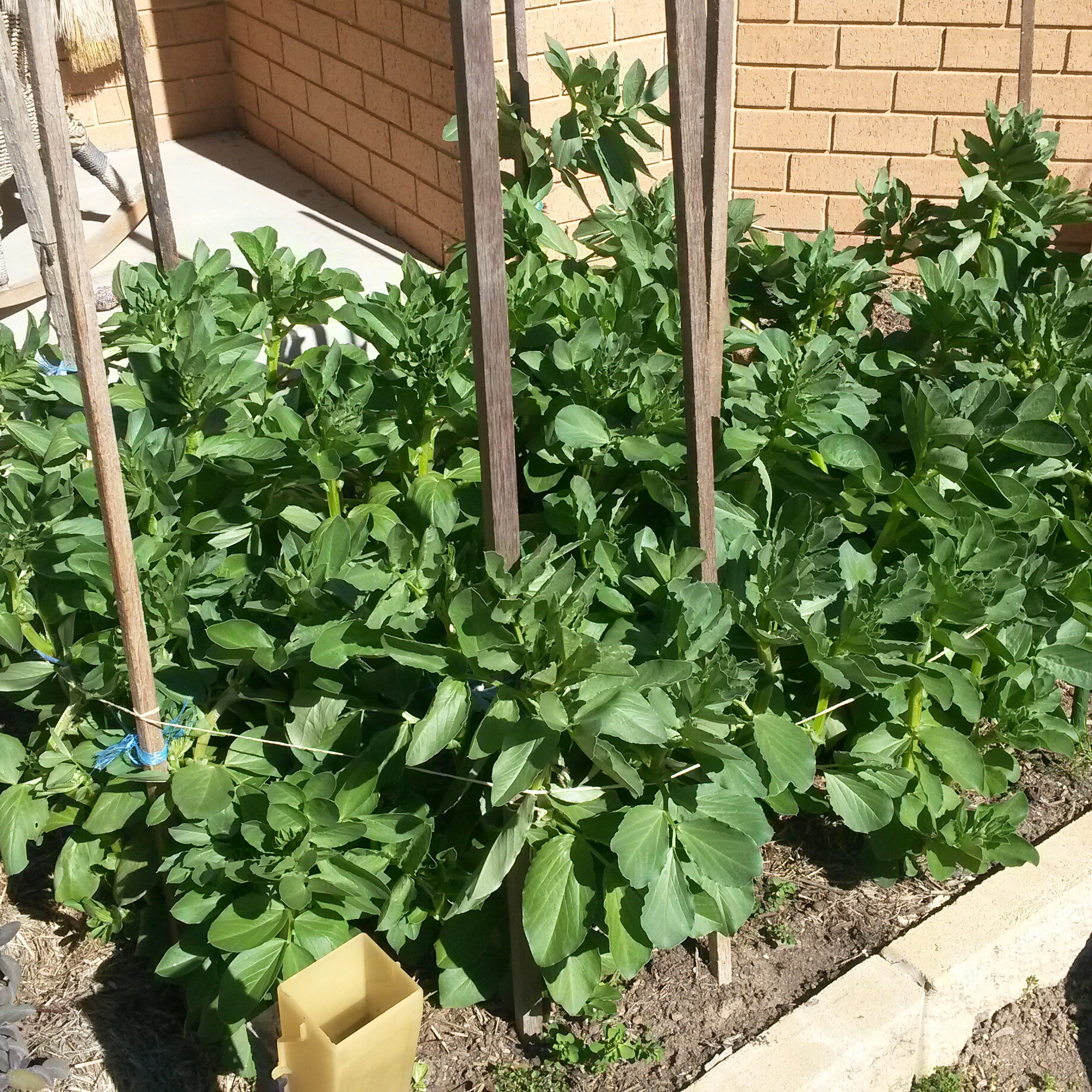
A Young Crop of Broad Beans – Canberra

Any object can be the subject for a poem, and Broad Beans was chosen by Les Murray as you can see in his poetry sermon below … it is such a wonderful imaginative portrayal of the broad bean it all its glory … those that grow this magnificent vegetable will surely appreciate his well-chosen words describing the nature of the vegetable.

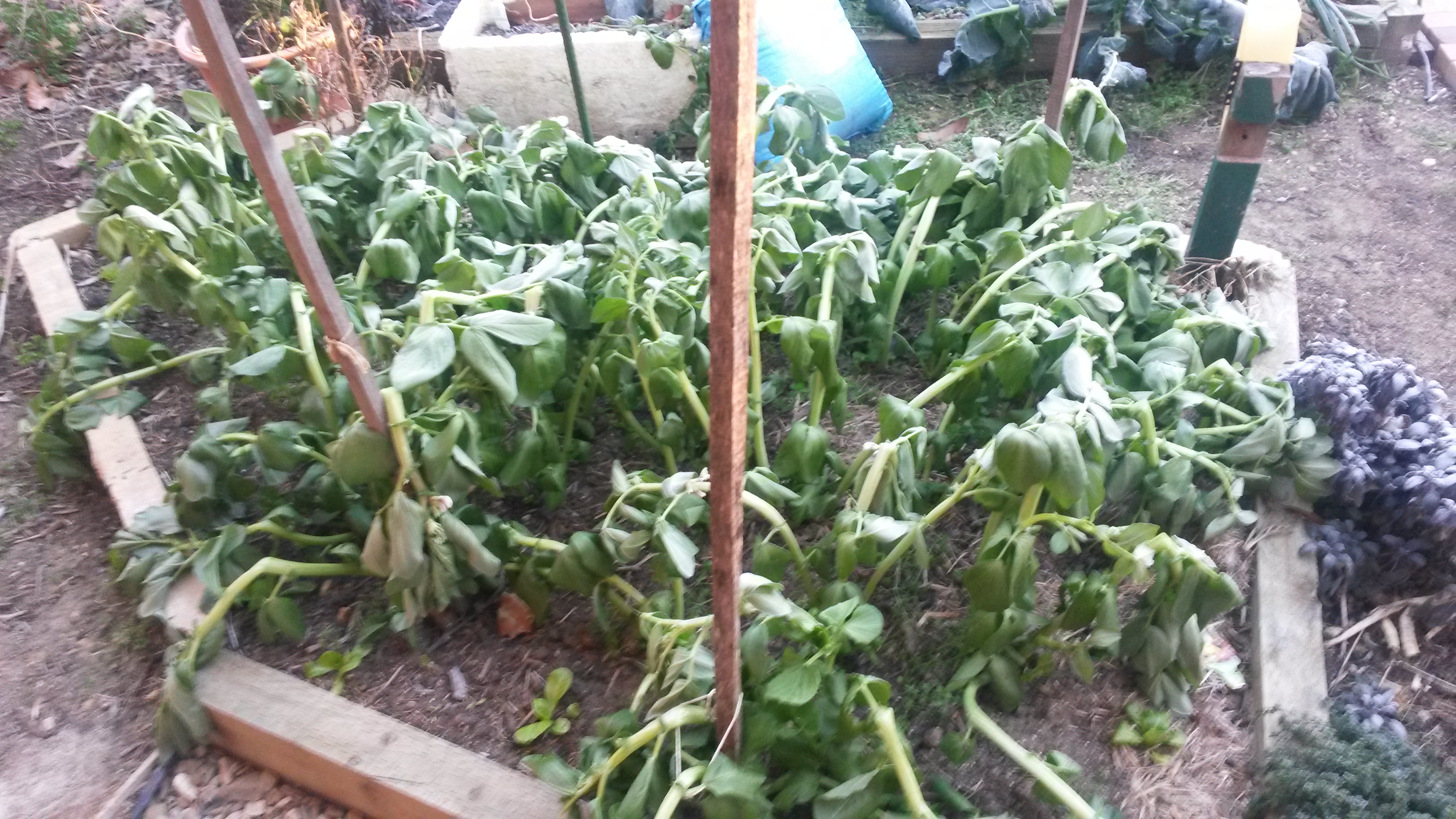
Broad beans will survive the most severe of frosts as shown by the image at the end of the poem and then rebound – as shown in the above photo of the same crop.

I have included my own italics commentary after each stanza …

The Broad Bean Sermon

Beanstalks, in any breeze, are a slack church parade
without belief, saying trespass against us in unison,
recruits in mint Air Force dacron, with unbuttoned leaves.

It does not take much wind to bend a broad bean and unless you tie them up they can easily become a motly ragbag showing … in the context of church propriety they could be asking for the company of sinners. Dacron = an artificial fibre, typically of a specific broad bean green colour.

Upright with water like men, square in stem-section
they grow to great lengths, drink rain, keel over all ways,
kink down and grow up afresh, with proffered new greenstuff.

The broad bean has a clear square cut nature to the stem and although the plant will fall over in all directions it will rise up afresh … in fact the stem can be half broken and it will still survive and recover.

Above the cat-and-mouse floor of a thin bean forest
snails hang rapt in their food, ants hurry through several dimensions:
spiders tense and sag like little black flags in their cordage.

A wonderful forest for a cat and mouse to play hide and seek and the foliage does attract snails – especially to the underside of leaves.

Going out to pick beans with the sun high as fence-tops, you find
plenty, and fetch them. An hour or a cloud later
you find shirtfulls more. At every hour of daylight

It is so easy to miss beans when you go out to pick … note you can pick them when they are not fully formed and treat them as you would a runner bean eating the sliced pod and bean.

appear more than you missed: ripe, knobbly ones, fleshy-sided,
thin-straight, thin-crescent, frown-shaped, bird-shouldered, boat-keeled                                                                                                             ones,
beans knuckled and single-bulged, minute green dolphins at suck,

I love these descriptive words that hang on the nature of the pod – minute green dolphins at suck – so apt.

Beans upright like lecturing, outstretched like blessing fingers
in the incident light, and more still, oblique to your notice
that the noon glare or cloud-light or afternoon slants will uncover

Yes, some of the bean pods will stretch out and be obvious and in a cluster while others will be erect next to a stem … so again you do have to look very closely when you go out picking the pods.

till you ask yourself Could I have overlooked so many, or
do they form in an hour? unfolding into reality
like templates for subtly broad grins, like unique caught expressions,

Each pod is very individual in its own knobby way … and when they are in full production you really need to pick daily

like edible meanings, each sealed around with a string
and affixed to its moment, an unceasing colloquial assembly,
the portly, the stiff, and those lolling in pointed green slippers …

They are by nature an informal or colloquial bunch and the pods do become very stiff and knarred the older they get … at that stage they need to be picked or the bean inside will be become too big and woody … the green slippers – a good choice as the pods hold the beans in a furry bed.

Wondering who’ll take the spare bagfulls, you grin with happiness
– it is your health – you vow to pick them all
even the last few, weeks off yet, misshapen as toes.

Misshapen toes fitting nicely to the slippers … and yes, you do vow to pick them all … for they can be blanched and frozen … so there are no worries about the excess … and of course they are good for you – If you don’t put too much cheese source on top!

Les Murray born 1938 (from The Vernacular Republic)

His poetry has won many awards and he is regarded as “the leading Australian poet of his generation” for full details on Australian poet Les Murray.

ColdBroadBeansBroad Beans – Early Morning – after minus 7.1 temperature – Canberra

Love’s Arithmetic – Catullus

Love’s Arithemetic

Let’s live and love while yet we may,
My Lesbia: all the things they say,
Those crabbed old gossips, let’s agree,
Aren’t worth a farthing – what care we?
Each night the sun goes down, each morn
Another bright new day is born,
And when we quench our puny light,
Comes endless sleep, eternal night.
So kiss me, Lesbia, I implore,
A thousand times, a hundred more,
Another thousand, with again
A hundred kisses in their train,
And even after these I will
Demand eleven hundred still,
Whereat we’d better cease to tot
And mix together all the lot,
Lest envious eyes should keep the count
And grudge my lips the full amount.

Valerius Catullus born Verona (87bc – 47bc)
Reversed by Peter Hadley
From An anthology of classical verse (Epic to Epigram)

Lesbia – was the literary pseudonym of the great love of Catullus
Lesbos – an island in the Aegean sea.

Wonderful eight syllable rhythm … let’s live and love while yet we may … and count not what others do or say … enjoy, enjoy, enjoy your day!

But beware of love’s attraction … that it does not move from addiction to affliction! … see below on details of his love-life

From Wikipedia … It was probably in Rome that Catullus fell deeply in love with the “Lesbia” of his poems, who is usually identified with Clodia Metelli, a sophisticated woman from the aristocratic house of patrician family Claudii Pulchri, sister of the infamous Publius Clodius Pulcher, and wife to proconsul Quintus Caecilius Metellus Celer. In his poems Catullus describes several stages of their relationship: initial euphoria, doubts, separation, and his wrenching feelings of loss. Clodia was a woman with a ravenous sexual appetite; “From the poems one can adduce no less than five lovers in addition to Catullus: Egnatius (poem 37), Gellius (poem 91), Quintius (poem 82), Rufus (poem 77), and Lesbius (poem 79).” There is also some question surrounding her husband’s mysterious death in 59 B.C., some critics believing he was domestically poisoned. Yet, a sensitive and passionate Catullus could not relinquish his flame for Clodia, regardless of her obvious indifference to his desire for a deep and permanent relationship. In his poems, Catullus wavers between devout, sweltering love and bitter, scornful insults that he directs at her blatant infidelity (as demonstrated in poems 11 and 58). His passion for her is unrelenting— yet it is unclear when exactly the couple split up for good. Catullus’s poems about the relationship display striking depth and psychological insight.

Dead Poets Readings – Canberra 2014

Poems read at the Dead Poets Dinner on 22 July 2014

The Dead Poets Dinner, run by Geoff Page as an annual event, was held at ‘The Gods’ Cafe at the Australian National University Canberra on the 22nd of July. This event started in 1998 and as usual it was a very lively and entertaining evening.

For interest below is a list of readers and the poems read. Full marks to Laurie McDonald in his rendition of David Meyers’ poem ‘Fencing in the Dark’– an excellent choice … an entertaining, humorous and easily accessible poem … it is difficult to choose deep poems at such events … that is unless the audience is already aware of the poem. David Meyers was a local poet and for many years he was involved with the Queanbeyan Bush Poets. He died of cancer at the age of 63.

Colin Campbell / Thomas Blackburn – A Smell of Burning, and Hospital for Defectives
Marion Halligan / Yeats – Sailing to Byzantium
Joyce Freedman / Siegfriend Sassoon – Everyone Sang
Hazel Hall / Hilaire Belloc – Tarantella
Chris Dorman / William Baine – The Archery of William Tell
Kathy Kituai / Muso Susaki – Sun in Midnight
Nicola Bowery / Sarah Broom – About Me, and That Moon
Wendy McMahon Bell / Seamus Heaney – Digging
P.S. Cottier / Catherine Martin – The Mouse Tower
Geoff Page / Seamus Heaney – From the Republic of Conscience
Laurie McDonald / David Meyers – Fencing in the Dark
Carmel Summers / Janice Bostok – Amongst the Graffiti
Moya Pacey / Elizabeth Bishop – One Art, and Louis MacNeice Wolves
Rosa O’Kae / Seamus Heaney – Skunk
Sue Edgar / J.L. Borges – Mirror, and Sylvia Plath – Mirror
Adrienne Johns / Hugh McDiarmid – Vanitas, and Balmorality
John Stokes / R.F. Brissenden – The Whale in Darkness
Mary Besemeres / Wizlawa Szymborska – View With a Grain of Sand
Sarah Rice / T.S. Eliot excerpts from Little Gidding
Emily Rice / Ted Hughes – Tractor
Annie Didcott / Keats – Ode to a Nightingale
Tony Williams / Neruda – The Dead Woman
Arlene Williams / J.J. Bray – Address to Pigeons in Hurtle Square, and William Carlos Williams – This is just to say
John Van de Graaff / Seamus Heaney – Follower, and D.H. Lawrence – Piano
Adrian Caesar / R.S. Thomas – The Owl
Michael Thorley / Thomas Hardy – Channel Firing, and They
Andrew McDonald / poems by two Scottish poets (Norman McCaig?)
Lesley Lebkowicz / poems by Soseki
Alan Gould / a song by Hamish Henderson
Alinta Leaver / Kenneth Koch – Variations on a Theme by William Carlos Williams
Richard Scutter / Auden – Musee des Beaux Arts, and Hopkins – Inversnaid
Martin Dolan / Dylan Thomas – Prologue
Marlene Hall / Thomas Wyatt – Whoso list upon the slipper top
Melinda Smith / Francis Webb – Cap and Bells, and The Bells of St Peter Mancroft
Ruth Pieloor / C.J. Dennis – The Australaise
Janette Pieloor / Gwen Harwood -The Secret Life of Frogs

Fern Hill – Dylan Thomas – Analysis

‘Fern Hill’ is one of Dylan Thomas’s most read poems. Dylan Thomas happens to be a favourite poet of The Prince of Wales (Prince Charles that is, and how appropriate). Prince Charles visited the poet’s birthplace in Swansea in September 2013. The following is a YouTube video of his reading of ‘Fern Hill’ …

Here are the words of the poem, my commentary appears after each stanza  …

Now as I was young and easy under the apple boughs
About the lilting house and happy as the grass was green,
The night above the dingle starry,
Time let me hail and climb
Golden in the heydays of his eyes,
And honoured among wagons I was prince of the apple towns
And once below a time I lordly had the trees and leaves
Trail with daisies and barley
Down the rivers of the windfall light.

(lilting house – a touch of music and song in the house, dingle = a small wooded valley or dell … this reflects to the green apple days of his youth – nice that when young ‘time let him climb golden in the heydays of his eyes’ – wonderful expression of how time lets the young stretch to the sky … and the young are always honoured by those older as he rode on the wagons and he himself lord of his rural environment invoked by easy movement as he went his merry way – another great line ‘down the rivers of the windfall light’- again linking with apples and movement)

And as I was green and carefree, famous among the barns
About the happy yard and singing as the farm was home,
In the sun that is young once only,
Time let me play and be
Golden in the mercy of his means,
And green and golden I was huntsman and herdsman, the calves
Sang to my horn, the foxes on the hills barked clear and cold,
And the sabbath rang slowly
In the pebbles of the holy streams.

(Invokes a very joyous outside childhood … I too can remember time spent as a child playing with friends on a farm … wonderful environment so many things to explore … so I can identify strongly with this stanza … here we have time again … time gives such a lot to the young – very merciful … the Sabbath rang slowly … the holy day distant, and defined in terms of the outside and nature – his holy place … the sound of water on pebbles his Sabbath bell)

All the sun long it was running, it was lovely, the hay
Fields high as the house, the tunes from the chimneys, it was air
And playing, lovely and watery
And fire green as grass.
And nightly under the simple stars
As I rode to sleep the owls were bearing the farm away,
All the moon long I heard, blessed among stables, the nightjars
Flying with the ricks, and the horses
Flashing into the dark.

(the haystacks as high as a house – the sound of wind in the chimney and the fireplace empty for this is summer his mind is fired by rich green grass … and as he falls asleep the farm is still much within his soul … the sound of owls fall away – what a great line ‘as I rode to sleep the owls were bearing the farm away’ … the movement of the night farm sleeps within him as he rides to sleep)

And then to awake, and the farm, like a wanderer white
With the dew, come back, the cock on his shoulder: it was all
Shining, it was Adam and maiden,
The sky gathered again
And the sun grew round that very day.
So it must have been after the birth of the simple light
In the first, spinning place, the spellbound horses walking warm
Out of the whinnying green stable
On to the fields of praise.

(the farm is personified in white dew … a religious reference to the first garden … and it was as though everything was reborn for him as the simple light defined the environment anew … the fields in praise for the gift of light and sun) 

And honoured among foxes and pheasants by the gay house
Under the new made clouds and happy as the heart was long,
In the sun born over and over,
I ran my heedless ways,
My wishes raced through the house high hay
And nothing I cared, at my sky blue trades, that time allows
In all his tuneful turning so few and such morning songs
Before the children green and golden
Follow him out of grace,

(I can imagine the trophies of pheasants and foxes and he equally honoured … and the endless days of happy sun-rich care free wanderings – that is before time starts to diminish and ‘follow him out of grace’)

Nothing I cared, in the lamb white days, that time would take me
Up to the swallow thronged loft by the shadow of my hand,
In the moon that is always rising,
Nor that riding to sleep
I should hear him fly with the high fields
And wake to the farm forever fled from the childless land.
Oh as I was young and easy in the mercy of his means,
Time held me green and dying
Though I sang in my chains like the sea.

(in the days of childhood there were no cares on how time would swallow and leave forever the days of innocent joy – he was ‘young and easy in the mercy of his means’ – we are all chained if you like, like the sea is chained by land – but it’s great to sing in our chains whether in childhood or a little older – nice that in childhood the chains are well hidden)


Yesterday and Today

Yesterday and Today

Yesterday God decided to take a holiday
and I really can’t blame him at all, I mean
he must have been a little disappointed
with one of his projects going a little off track,
and working twenty-four by seven over the
centuries is, I imagine, quite demanding.
I am sure God knows where to go for a break
and I am sure he won’t want us to turn up!

Today is a little different, I’m happy to report that
the sun is breaking through threatening clouds and
the waste-paper bin is empty, sprawled out on
his desk are the original drawings, a little crumpled,
maybe he believes things can be straightened out –
perhaps he has far more faith than you or I.

Richard Scutter 20 July 2014

The news of late has been so sickening and I have felt physically sick inside. Goodness knows  how others feel that are immediately affected by the inhumanity in whatever country. I just had to get out into fresh air and wash the mind from the media concentration on the horrific events fracturing the world.

We went for a walk on part of the Canberra Centenary Trail. It was a typical beautiful winter sky after night temperatures below freezing and then sunshine all day. Perfect conditions for bushwalking although you had to be careful because the track was quite slippery after recent rains and the melting of icy mud. The image below is from the Red Rocks Lookout along the Murrumbidgee river between Kambah Pool and Tuggeranong Town Centre, Canberra.

RedRockLookOut

And here is a link to a poem by W. H. Auden in relation to suffering.